CDR GEORGE M. OTTINGER, USN
Lucky Bag Yearbook
From the 1932 Lucky Bag:
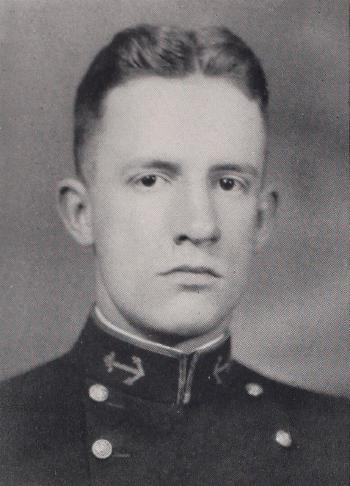
GEORGE MALONE OTTINGER
Wrestling; Class Cross Country; Track: 2 P. O.
“Where are you from, mister?” Memphis, Tennessee, suh. Where yo’ from?"
And Bunker Hill Jr. becomes a sailor. It was not as easy as that though. He was sinking for the third time when a small voice came to the rescue and said “Go get ’em, George!” And George got ’em. Constant hard work made one-time green academics ripen into delicious fruit.
Although a Red Mike of the nth degree he was unable to escape the wiles of Miss Springfield with whom he spent many a leisurely afternoon strolling around the terrace.
There is nothing indefinite about Bunky. He makes up his mind to do a thing and does it. Always ready to do a good turn, a truer friend never lived. He has a smile for everyone and is readily distinguished by a sincere and inimitable laugh.
Bunky’s biggest weakness is a diminutive blue-eyed Rebel back in sunny Tennessee. There is only one cure for which both have been patiently (?) waiting. God bless them.
Loss
George was lost on March 24, 1945, when his F4U-1D went missing during a mission over Okinawa. He was flying from the USS Bunker Hill (CV 17) as commanding officer of Air Group (CAG) 84; the aircraft belonged to Marine Fighting Squadron (VMF) 451. (He is listed on that page as “Offinger”.)
Other Information
From researcher Kathy Franz:
The Commercial Appeal, Memphis, Tennessee, April 9, 1945 reported: “A fellow flier told commanding officers the officer had been seen swimming after his aircraft had been shot down, but that he had disappeared before he could be approached by boat.”
The Knoxville News-Sentinel, Tennessee, January 6, 1946 reported: “A Memphis dispatch says that young Ottinger’s plane was shot down at sea, that his life jacket inflated but his lifecraft was lost. Rescue planes dropped rafts but he drowned before reaching one.”
George was a member of the First Methodist Church. His widow was the former Mary Suitor. Their twin daughters were Marilyn and Gail, and the youngest daughter was Mary Elizabeth “Bettye.”
George’s father John, who was active in the banking, insurance and mortgage businesses, died in July, 1936. His mother was Julia, sister Frances, and brother John, Jr.
His wife was listed as next of kin.
He earned his wings as naval aviator #4152 on October 1, 1935.
Photographs
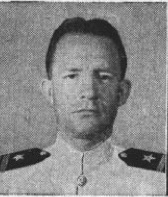
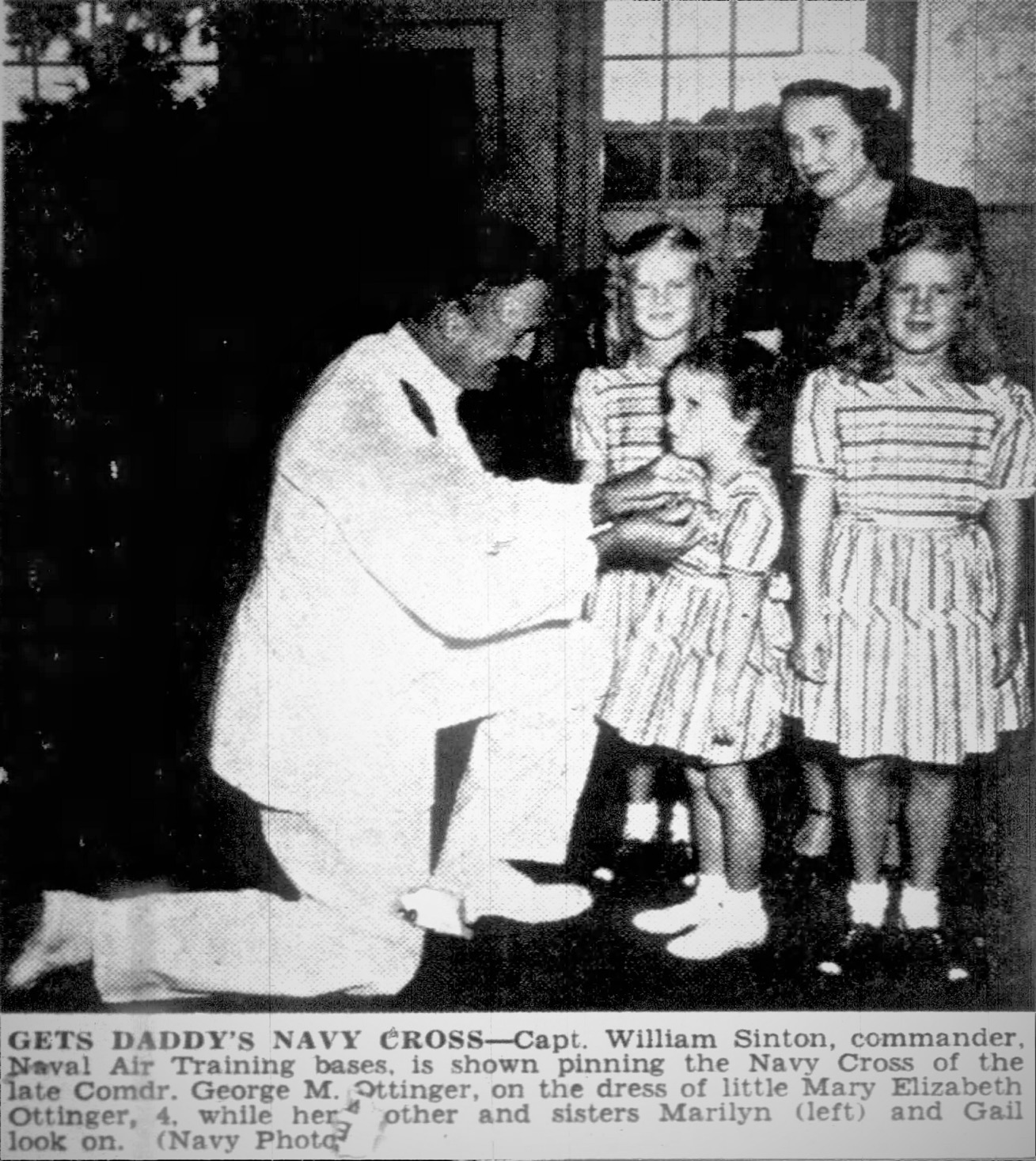
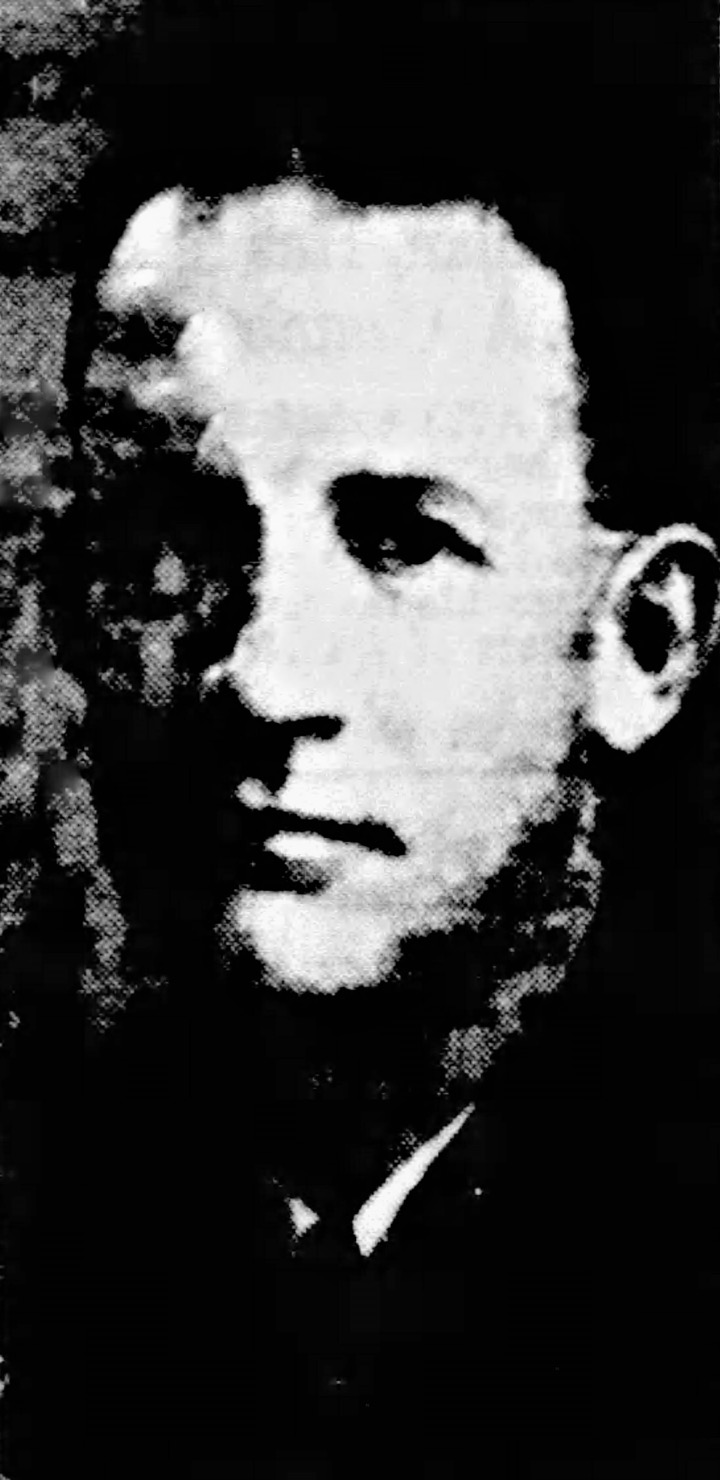
Navy Cross
From Hall of Valor:
The President of the United States of America takes pride in presenting the Navy Cross (Posthumously) to Commander George Malone Ottinger (NSN: 0-71550), United States Navy, for extraordinary heroism in operations against the enemy while serving as Pilot of a carrier-based Navy Combat Plane embarked from the U.S.S. BUNKER HILL (CV-17), and as Task Group Strike Commander and Target Coordinator of a flight of Aircraft from seven carrier air groups, in action against enemy Japanese forces in Kure Harbor and the Kure Naval Arsenal, on Shikoku, on 19 March 1945. Boldly penetrating enemy territory with his Navy fighter plane as he led the first wave of strike planes across the Japanese home island and over the heavily-defended Inland Sea in a daring assault upon vital enemy positions, Commander Ottinger, upon reaching the designated area, assigned a major unit of the Japanese Fleet and the Japanese Arsenal at Kure to each division of his strike group. Executing his daring and relentless attack through a furious barrage of intensive and desperate anti-aircraft fire of all calibers from enemy ships and surrounding shore batteries, he and his men coolly struck against their targets with unfaltering precision, scoring direct hits and inflicting severe damage on two carriers, two battleships, two cruisers and two destroyers. Pressing on with dauntless determination to fulfill their destructive mission, six of his torpedo planes released their deadly bombs upon the enemy’s Arsenal with devastating results. By his brilliant tactics, his superb leadership and unflinching courage, Commander Ottinger inspired his men to perform a vital assignment with outstanding success, and his tireless energy and valiant devotion to duty in the supervision of this hazardous operation were in keeping with the highest traditions of the United States Naval Service.
Action Date: 19-Mar-45
Service: Navy
Rank: Commander
Company: Commanding Officer
Regiment: Air Group 84 (AG-84)
Division: U.S.S. Bunker Hill (CV-17)
Distinguished Flying Cross
From Hall of Valor:
SYNOPSIS: Commander George Malone Ottinger (NSN: 0-71550), United States Navy, was awarded the Distinguished Flying Cross (Posthumously) for extraordinary achievement while participating in aerial flight as a Fighter Plane Pilot and Task Group Leader embarked in U.S.S. BUNKER HILL (CV-17), on 16 - 17 February 1945.
General Orders: Bureau of Naval Personnel Information Bulletin No. 348 (March 1946)
Action Date: February 16 - 17, 1945
Service: Navy
Rank: Commander
Company: Commanding Officer
Regiment: Air Group 84 (AG-84)
Division: U.S.S. Bunker Hill (CV-17)
From Hall of Valor:
SYNOPSIS: Commander George Malone Ottinger (NSN: 0-71550), United States Navy, was awarded a Gold Star in lieu of a Second Award of the Distinguished Flying Cross for extraordinary achievement while participating in aerial flight during World War II.
General Orders: American Battle Monuments Commission
Action Date: World War II
Service: Navy
Rank: Commander
Company: Commanding Officer
Regiment: Air Group 84 (AG-84)
Division: U.S.S. Bunker Hill (CV-17)
From Hall of Valor:
SYNOPSIS: Commander George Malone Ottinger (NSN: 0-71550), United States Navy, was awarded a Second Gold Star in lieu of a Third Award of the Distinguished Flying Cross (Posthumously) for extraordinary achievement while participating in aerial flight as a Strike Leader embarked in U.S.S. BUNKER HILL (CV-17), over Okinawa, 23 to 24 March 1945.
General Orders: Bureau of Naval Personnel Information Bulletin No. 351 (June 1946)
Action Date: March 23 - 24, 1945
Service: Navy
Rank: Commander
Division: U.S.S. Bunker Hill (CV-17)
Navy Directories & Officer Registers
The "Register of Commissioned and Warrant Officers of the United States Navy and Marine Corps" was published annually from 1815 through at least the 1970s; it provided rank, command or station, and occasionally billet until the beginning of World War II when command/station was no longer included. Scanned copies were reviewed and data entered from the mid-1840s through 1922, when more-frequent Navy Directories were available.
The Navy Directory was a publication that provided information on the command, billet, and rank of every active and retired naval officer. Single editions have been found online from January 1915 and March 1918, and then from three to six editions per year from 1923 through 1940; the final edition is from April 1941.
The entries in both series of documents are sometimes cryptic and confusing. They are often inconsistent, even within an edition, with the name of commands; this is especially true for aviation squadrons in the 1920s and early 1930s.
Alumni listed at the same command may or may not have had significant interactions; they could have shared a stateroom or workspace, stood many hours of watch together, or, especially at the larger commands, they might not have known each other at all. The information provides the opportunity to draw connections that are otherwise invisible, though, and gives a fuller view of the professional experiences of these alumni in Memorial Hall.
October 1932
January 1933
April 1933
July 1933
October 1933
April 1934
July 1934
October 1934
January 1935
April 1935
October 1935
January 1936
April 1936
July 1936
January 1937
April 1937
September 1937
January 1938
July 1938
January 1939
October 1939
June 1940
November 1940
April 1941
George is one of 52 members of the Class of 1932 on Virtual Memorial Hall.