LTJG MATHIAS B. WYATT, USN
Lucky Bag Yearbook
From the 1929 Lucky Bag:
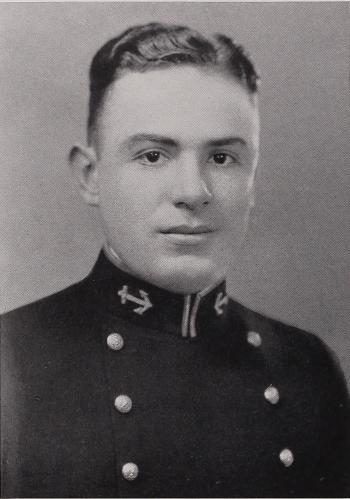
MATHIAS BEALLY WYATT
Lucky Bag Staff. Wrestling 4, 3, 2, 1, w29t. Ring Dance Committee. Three Stripes.
A MEDICAL career was forsaken for the less strenuous life of a Naval Officer, and Benny arrived in our midst. His nature is not one that immediately makes an impression wherever it chances to roam, but with each new contact his name and ability is noted and remembered. Now we find him in the upper strata of the class, a marked success, a three-striper, and ready for the fleet.
Life here has been interesting, active, and not a little laborious. Wrestling supplied the chief diversion, with some soccer and lacrosse to keep him fit during the warmer seasons. Tennis and golf are favorites, too; the remarkable thing is that he displays a marked degree of skill in each type of play.
He likes to read newspapers, run Plebes, dance, play bridge, talk, and eat. Girls? Well ———.
Forcefulness and purpose are dominant characteristics of his nature. Initiative prompts his actions, but never impulse; every voluntary move has a sound reason behind it. He is an earnest student, a tireless worker, a social asset, and a much-desired companion. Friendships are highly treasured; though they may not be as abundant as the stars, they are as steadfast and true. He is ambitious—for others as for himself; his intimates are certain of the fulfillment of those dreams, and join in wishing him the best of life, love, and happiness.
Loss
From Naval History and Heritage Command:
Lt. (jg) Mathias Beally Wyatt died when plane crashed into the sea and sank just after take off from USS Saratoga (CV-3). 11 May 1935.
Other Information
Per The Baltimore Sun, May 13, 1935:
The plane crash which killed Lieutenant Wyatt, a native of South Carolina, took place 200 miles east of Hawaii.
Caught in Slipstream
Wyatt, in one of eighteen fighting planes, had taken off the aircraft carrier Saratoga to ward of an “enemy” attack of submarines coming out from the island. His ship flew into the slipstream (currents caused by winds and propellers) of a companion plane and plunged down into water three miles deep.
The destroyer MacLeish and a plane guard reached the spot one minute after the crash but the plane sank without a trace.
From researcher Kathy Franz:
Mathias graduated from Easley public schools and then attended The Citadel.
He married Jane Elizabeth Nowlin in July, 14, 1934, in Albion, Michigan. His gift to his new bride was an Oldsmobile sedan.
A memorial service was held in his parents’ home in Easley on May 13. Mathias was a member of the First Baptist church in Easley.
His father was James, a businessman, and his mother was Anne. Brothers Lt. James L. Wyatt (’20) of the U. S. S. Saratoga and Lieut. Joe E. Wyatt (’28) of the U. S. S. Evans were on maneuvers in the Pacific. Two other brothers were William F. and Charles. Their two sisters were Annie (Mrs. E. L. Clarke) and Almeda (Mrs. C. E. Ballard.)
Mathias’ brother James witnessed his crash. In 1920, James was an ensign on the U. S. S. Florida in Guantanamo Bay Naval Base, Cuba. In 1940, he was in Long Beach, on the U. S. S. Massachusetts. His wife was Kathryan, and their children were M. Lucy and Jim. He retired as a captain, and he died in April 1982.
He was survived by his parents and six siblings; he has a memory marker in South Carolina.
Mathias was a member of Fighting Squadron (VF) 6B.
Photographs
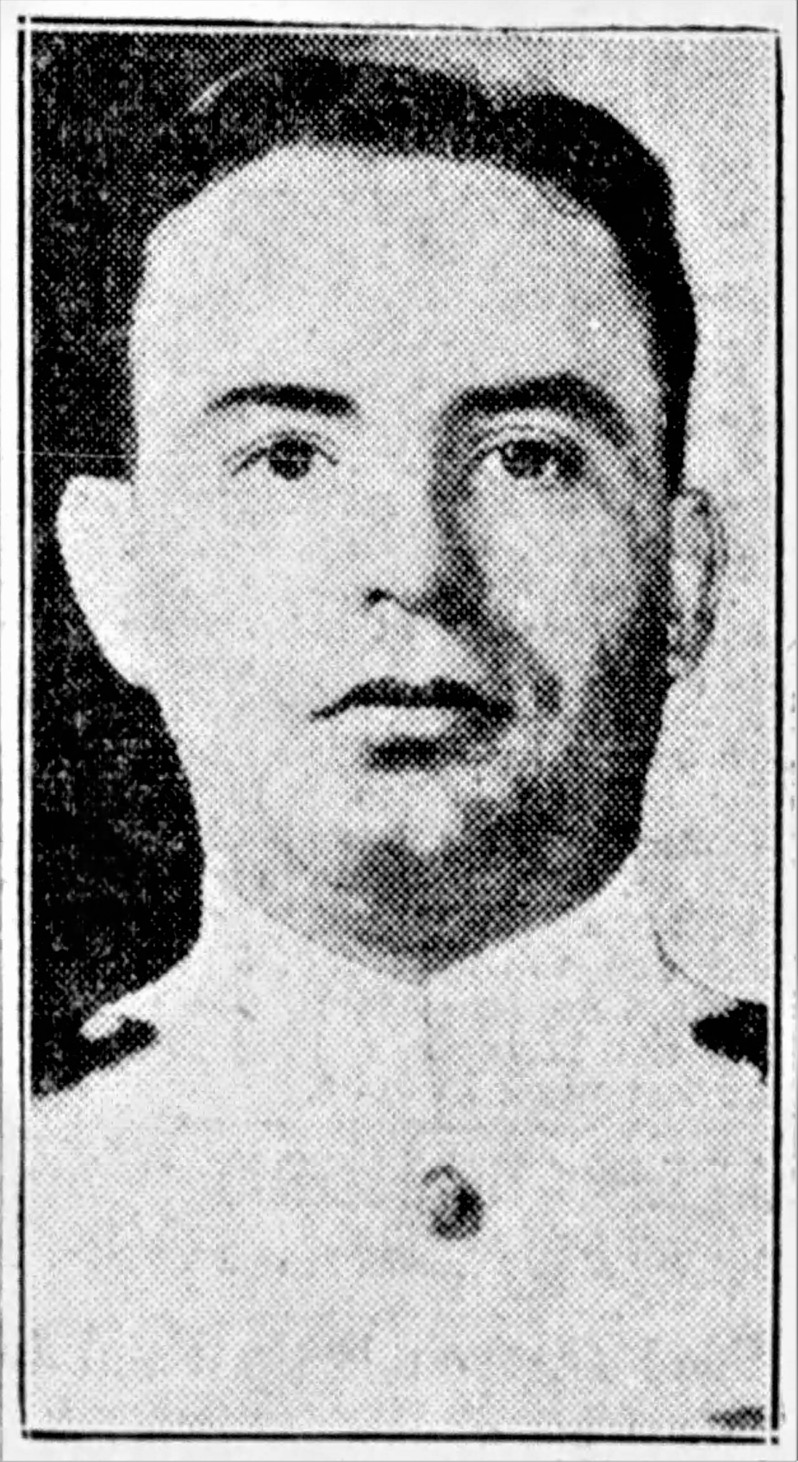
Navy Directories & Officer Registers
The "Register of Commissioned and Warrant Officers of the United States Navy and Marine Corps" was published annually from 1815 through at least the 1970s; it provided rank, command or station, and occasionally billet until the beginning of World War II when command/station was no longer included. Scanned copies were reviewed and data entered from the mid-1840s through 1922, when more-frequent Navy Directories were available.
The Navy Directory was a publication that provided information on the command, billet, and rank of every active and retired naval officer. Single editions have been found online from January 1915 and March 1918, and then from three to six editions per year from 1923 through 1940; the final edition is from April 1941.
The entries in both series of documents are sometimes cryptic and confusing. They are often inconsistent, even within an edition, with the name of commands; this is especially true for aviation squadrons in the 1920s and early 1930s.
Alumni listed at the same command may or may not have had significant interactions; they could have shared a stateroom or workspace, stood many hours of watch together, or, especially at the larger commands, they might not have known each other at all. The information provides the opportunity to draw connections that are otherwise invisible, though, and gives a fuller view of the professional experiences of these alumni in Memorial Hall.
October 1930
January 1931
April 1931
July 1931
October 1931
January 1932
April 1932
October 1932
January 1933
April 1933
July 1933
October 1933
April 1934
July 1934
October 1934
January 1935
April 1935
Mathias is one of 26 members of the Class of 1929 on Virtual Memorial Hall.