LTJG NORMAN M. OSTERGREN, USN
Lucky Bag Yearbook
From the 1935 Lucky Bag:
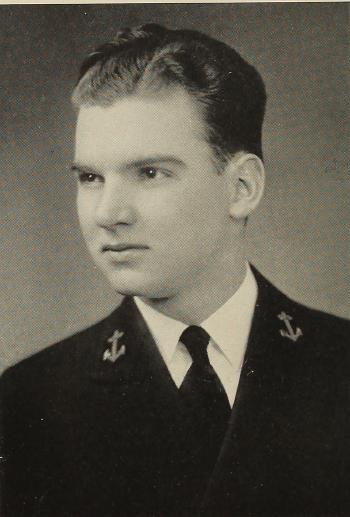
NORMAN MILLARD OSTERGREN
Soccer 4, 3, 2, 1, N. Boxing 4, 3, Numeral. Reception Committee 3, 2, 1. Company C. P. O.
Loss
Norman was lost on February 20, 1939 when his plane crashed near McDavid, Florida, while he was a student aviator.
Eight total training planes crashed after being trapped in the air for five hours by a “pea-soup” ground fog. Six pilots parachuted to safety, but two were killed: Norman and Lieutenant G. F. Presser, Sr. of the Brazilian Navy, a “courtesy student.” Norman was found on the ground next to his plane.
Other Information
From researcher Kathy Franz:
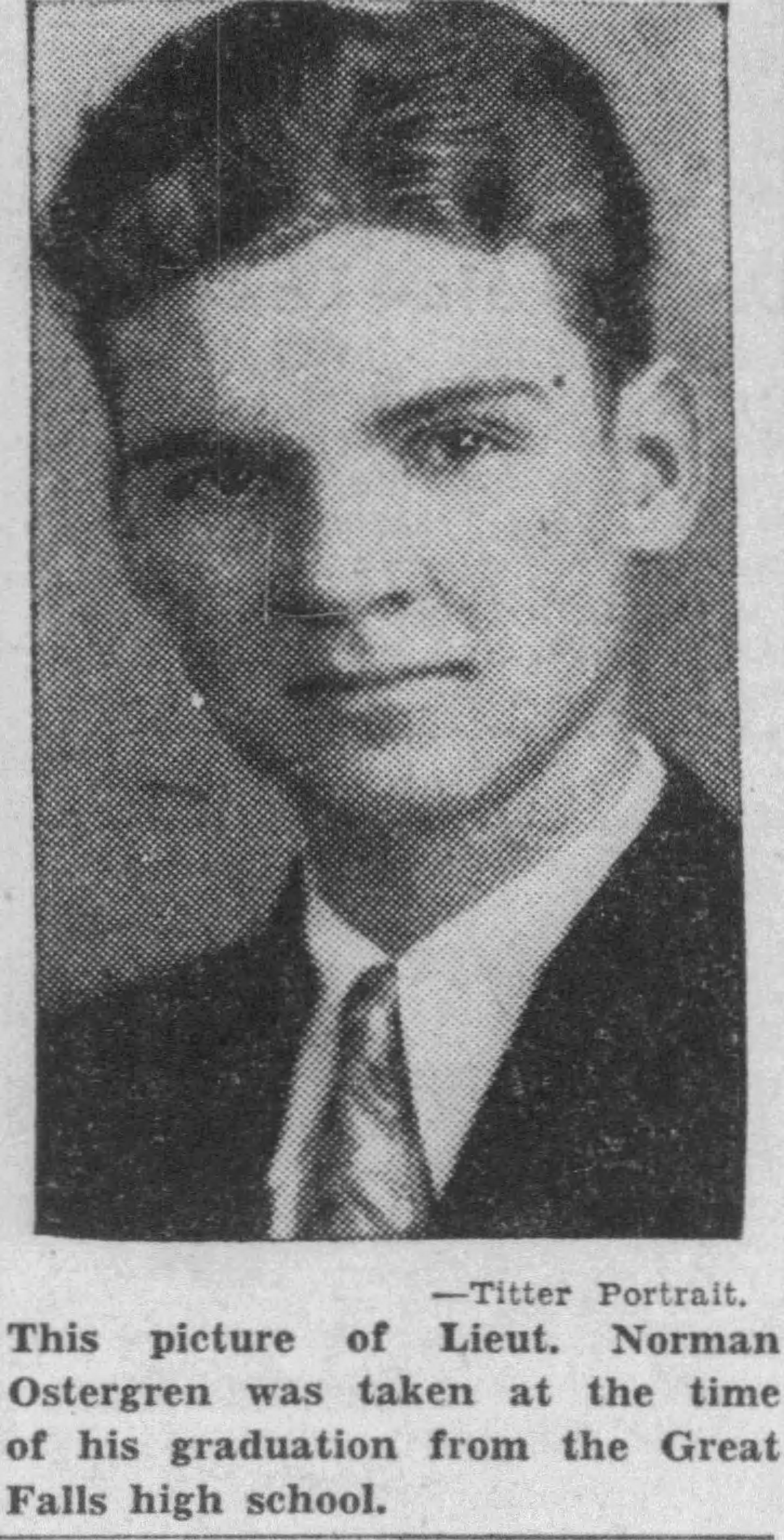
Born at St. Paul, Minnesota, Norman graduated in 1930 from Great Falls High School in Montana. In his high school yearbook, “Ossie” was “Full of mischief, full of fun, Yet he is a gentleman.” Did you ever see Ossie without a cheerful grin spread from ear to ear and a twinkle in those blue eyes of his? You did not. Studies did not cause Ossie any loss of sleep, but he always got by, aided by a very valuable gift of blarney, no doubt. He surely could toot a wicked horn, too, and all in all, Norman is a mighty good man to have around. Scientific Course. Entered from North Bend, Washington, 2. Basketball 1, 2; Orchestra 4; Hi-Life 4; Pep Band 4.
As a high school senior, in April 1930, he was fined $2.50 for driving a car without lights or license plates. In May 1931, Norman performed a solo cornet piece in the Great Falls Boys Band concert. He attended the University of Washington for a year before entering the Naval Academy. He was appointed to the Naval Academy by Scott Leavitt. On June 7, 1937, he married Helena Finch of Baltimore at Long Beach, California.
His father, Norman, was an electrician for an electric railroad in Great Falls, Montana who was born in Sweden. His mother was Elsie, and he had a brother Ralph.
Norman is buried in Arlington National Cemetery.
Photographs
Navy Directories & Officer Registers
The "Register of Commissioned and Warrant Officers of the United States Navy and Marine Corps" was published annually from 1815 through at least the 1970s; it provided rank, command or station, and occasionally billet until the beginning of World War II when command/station was no longer included. Scanned copies were reviewed and data entered from the mid-1840s through 1922, when more-frequent Navy Directories were available.
The Navy Directory was a publication that provided information on the command, billet, and rank of every active and retired naval officer. Single editions have been found online from January 1915 and March 1918, and then from three to six editions per year from 1923 through 1940; the final edition is from April 1941.
The entries in both series of documents are sometimes cryptic and confusing. They are often inconsistent, even within an edition, with the name of commands; this is especially true for aviation squadrons in the 1920s and early 1930s.
Alumni listed at the same command may or may not have had significant interactions; they could have shared a stateroom or workspace, stood many hours of watch together, or, especially at the larger commands, they might not have known each other at all. The information provides the opportunity to draw connections that are otherwise invisible, though, and gives a fuller view of the professional experiences of these alumni in Memorial Hall.
July 1936
January 1937
April 1937
September 1937
January 1938
July 1938
January 1939
Norman is one of 56 members of the Class of 1935 on Virtual Memorial Hall.