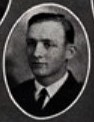
LTJG JAMES A. MURPHY, USN
Lucky Bag Yearbook
From the 1931 Lucky Bag:
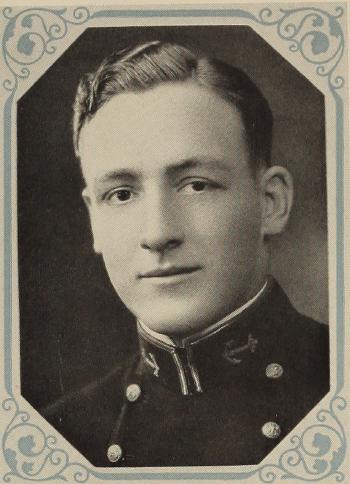
James Albert Murphy
Wrestling 4, 3, 2, 1 Football 4 Class Football 2 B Squad 1 Class Baseball 4, 2 2 P. O.
“Pete” came from the wide open spaces, down Texas way to be exact, where they grow ’em big and full of fun. He is just as you would picture him—big, slow moving, easy going, humorous, and good natured.
You never hear of his being really griped. And as for giving anyone a ‘growl’—that word is not in his dictionary. He has his share of faults, no doubt, but you would have a sweet time finding them under all of that good humor.
He doesn’t try to be funny, but he takes the cake the way he comes down with the right thing at the wrong time—or vice versa. Corner him sometime and have him tell you how he played a cornet in a band when he didn’t know one note from its closest relation.
Easy going—he hasn’t a care in the world. At least, if he has, he keeps it well hidden. He doesn’t worry about academics or anything, but just takes the hand that life deals him and stands pat—a truly happy way to live. His absence at the Academy will be keenly felt.
Loss
“Pete” was lost on July 21, 1938 when the seaplane he was piloting crashed off Point San Bruno, California (near San Francisco). The other crewman aboard was also killed. They were members of Observation Squadron (VO) 3 aboard USS Idaho (BB 24).
Other Information
From researcher Kathy Franz:
At Texas A&M in 1926 and 1927, James was a member of the Falls County Club. In 1927, he was a second year private in Company A Signal Corps.
From Find A Grave:
Known to his friends and family as “Pete,” a derivative of his childhood nickname “Peterjack,” Lt. (J.G.) Murphy was born in Chilton, Texas and raised in nearby Marlin. He was educated in the public schools of Falls County, Texas, at Texas A. & M. University, and at the United States Naval Academy at Annapolis, MD, Class of 1931.
A pioneering U.S. Naval aviator, Lt. Murphy was part of the first naval squadron to successfully cross the Pacific from California to Hawaii without refueling: Patrol Squadron 6-F, which departed from San Diego for Pearl Harbor, Hawaii on Jan. 27, 1937, arriving at its destination with only a teacup’s worth of fuel remaining in each plane. In July of 1937 he was part of the first search effort by the Navy seeking to find missing aviatrix Amelia Earhart.
On Dec 17, 1932 Lt. Murphy was married at Christ Episcopal Church in Pensacola, FL to Marion Laflin, originally of San Diego, CA. Together, they resided at Pensacola, FL, Philadelphia, PA, Honolulu, HI, and Coronado, CA.
Lt. Murphy was killed in the line of duty on July 21, 1938 when his single motor observation seaplane crashed into San Francisco Bay. He was 31 years old. Lt. Murphy was flying in a four plane formation which had taken off shortly before from the USS Idaho. Witnesses reported that his plane suddenly dropped out of the formation and spun out of control, plunging 2,000 feet into the Bay off Point San Bruno. Also killed was chief aircraft machinist mate Orville Melvin Stewart, 36, of Los Angeles, the only other person aboard the seaplane. Lt. Murphy is buried beside his in-laws, Clara Sauer Haas (memorial #58282303), mother of Marion, and Lt. Cdr. John Jacob Haas (memorial #3403869), Marion’s step-father.
His wife Marion later remarried.
Photographs
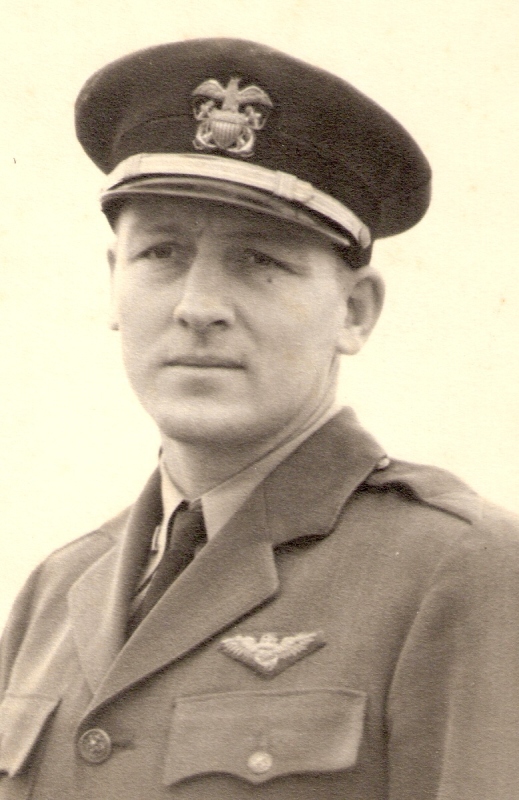
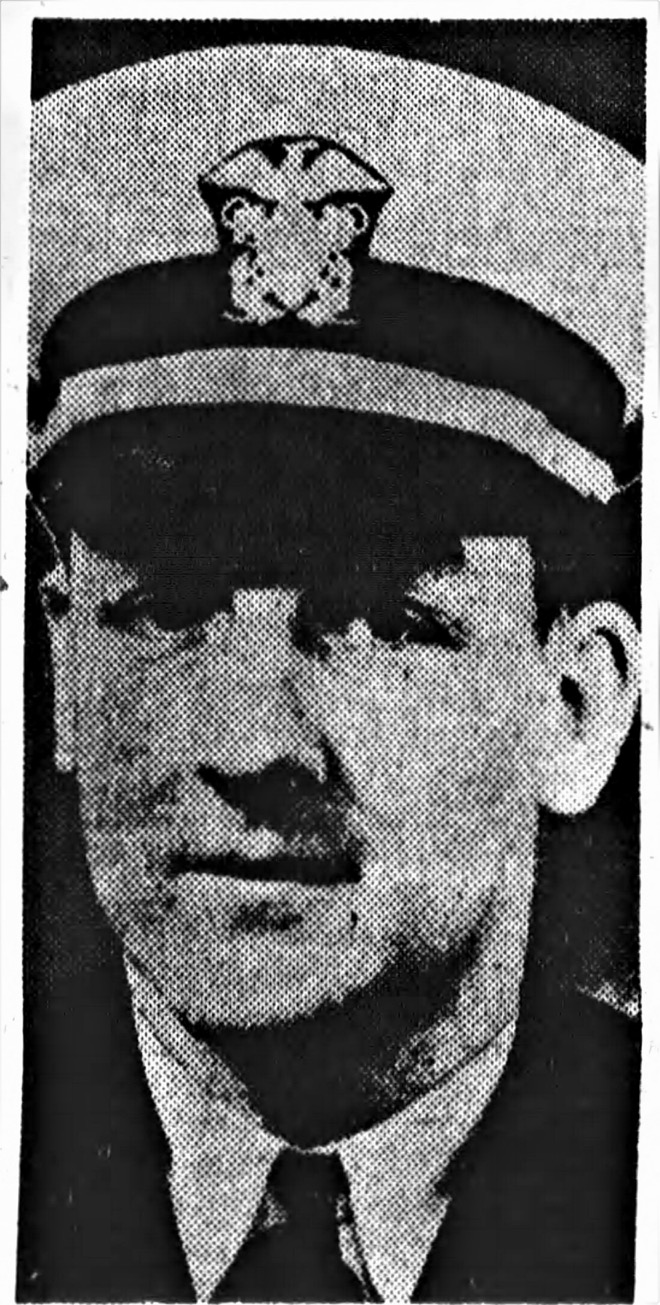
Navy Directories & Officer Registers
The "Register of Commissioned and Warrant Officers of the United States Navy and Marine Corps" was published annually from 1815 through at least the 1970s; it provided rank, command or station, and occasionally billet until the beginning of World War II when command/station was no longer included. Scanned copies were reviewed and data entered from the mid-1840s through 1922, when more-frequent Navy Directories were available.
The Navy Directory was a publication that provided information on the command, billet, and rank of every active and retired naval officer. Single editions have been found online from January 1915 and March 1918, and then from three to six editions per year from 1923 through 1940; the final edition is from April 1941.
The entries in both series of documents are sometimes cryptic and confusing. They are often inconsistent, even within an edition, with the name of commands; this is especially true for aviation squadrons in the 1920s and early 1930s.
Alumni listed at the same command may or may not have had significant interactions; they could have shared a stateroom or workspace, stood many hours of watch together, or, especially at the larger commands, they might not have known each other at all. The information provides the opportunity to draw connections that are otherwise invisible, though, and gives a fuller view of the professional experiences of these alumni in Memorial Hall.
July 1931
October 1931
January 1932
April 1932
October 1932
January 1933
April 1933
July 1933
October 1933
April 1934
July 1934
October 1934
January 1935
April 1935
October 1935
January 1936
April 1936
July 1936
January 1937
April 1937
September 1937
January 1938
July 1938
James is one of 50 members of the Class of 1931 on Virtual Memorial Hall.