CAPT ALBERT S. MAJOR, JR., USN
Lucky Bag Yearbook
From the 1932 Lucky Bag:
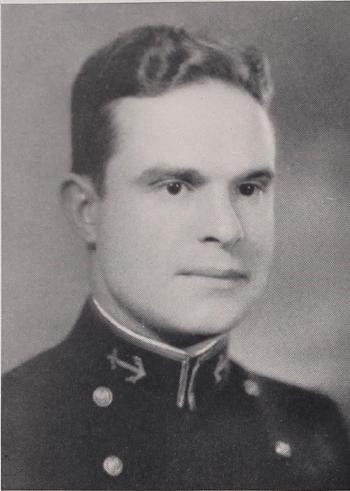
ALBERT SIDNEY MAJOR, JR.
Football, NA; Class Track; 1 P. O.
Loss
From The Progress-Index of Petersburg, Virginia on May 19, 1955:
NAVY CAPTAIN KILLED IN JET PLANE CRASH
JACKSONVILLE, Fla. The Navy today listed as dead Capt. Albert S. Major, commanding officer of Saufley Field near Pensacola, Fla., and Lt. Edward L. Kennedy, also of Saufley, whose two-place jet crashed Into a swampy area near here Tuesday. Previously they had been listed as missing because parts of two bodies found in the burned wreck age had not been positively identified. The fliers crashed shortly after takeoff from Jacksonville Naval Air Station on a flight to Saufley.
The aircraft was a TV-2 jet trainer.
Other Information
From researcher Kathy Franz:
In 1928, Albert was in the second class at V.M.I. He was a member of A.S.C.E. and was an assistant cheerleader.
He was nominated to the Naval Academy by Representative Henry St. George Tucker of Lexington.
On August 31, 1935, Albert married Eloise Dasher at her home in Chevy Chase, Maryland. They had four children: Shirley, Mary, Mollie and Charles. Shirley married Lt. Howard Thayer on October 29, 1955, in Las Vegas, Nevada.
In March, 1942, Albert’s sister Katherine married Lieutenant-Commander Julius C. Early Jr., a flight surgeon in the U. S. Navy. Albert gave his sister in marriage.
He was awarded the American Theatre, Asiatic-Pacific, American Defense, World War II Victory and National Defense Medals, as well as the Bronze Star and presidential Unit Citation for participation in the Pacific Campaign WWII.
In 1920, Albert’s father Albert was a general contractor, mother Lottie, sisters Mary and Katherine, and brother Billie (William.) He also had a brother Walter.
He is buried in Arlington National Cemetery with his wife, who survived him. He was also survived by two daughters and a son. (Information from July 1955 issue of Shipmate.)
Wartime & Postwar Service
From researcher Kathy Franz:
July, 1941 to January, 1943, commanding officer of the seaplane tender USS Teal (AM 23) in the Aleutian Theater.
Until May 1944, USS Bunker Hill, air operations officer and assistant air officer.
Until March 1945, Executive officer of the USS Bougainville.
1945-1947, Head of the flying officers detail section in the office of the chief of naval operations.
In July, 1947, operations officer on staff of commander, Fleet Air Wing II.
In August, 1949, Naval War College as a student
July, 1950, executive officer, Moffett Field, Sunnyvale
January, 1951, commanding officer of Air Transport Squadron II. He qualified as plane commander of the Mars aircraft (four-engine flying boats), operating between Alameda and Honolulu. Promoted to captain in 1951 and left VR-2 in 1953 for Saufley.
22 months at Saufley, and had received orders from Washington to report for duty as chief of staff for Commander Carrier Division 5, operating with the Seventh Fleet.
Photographs
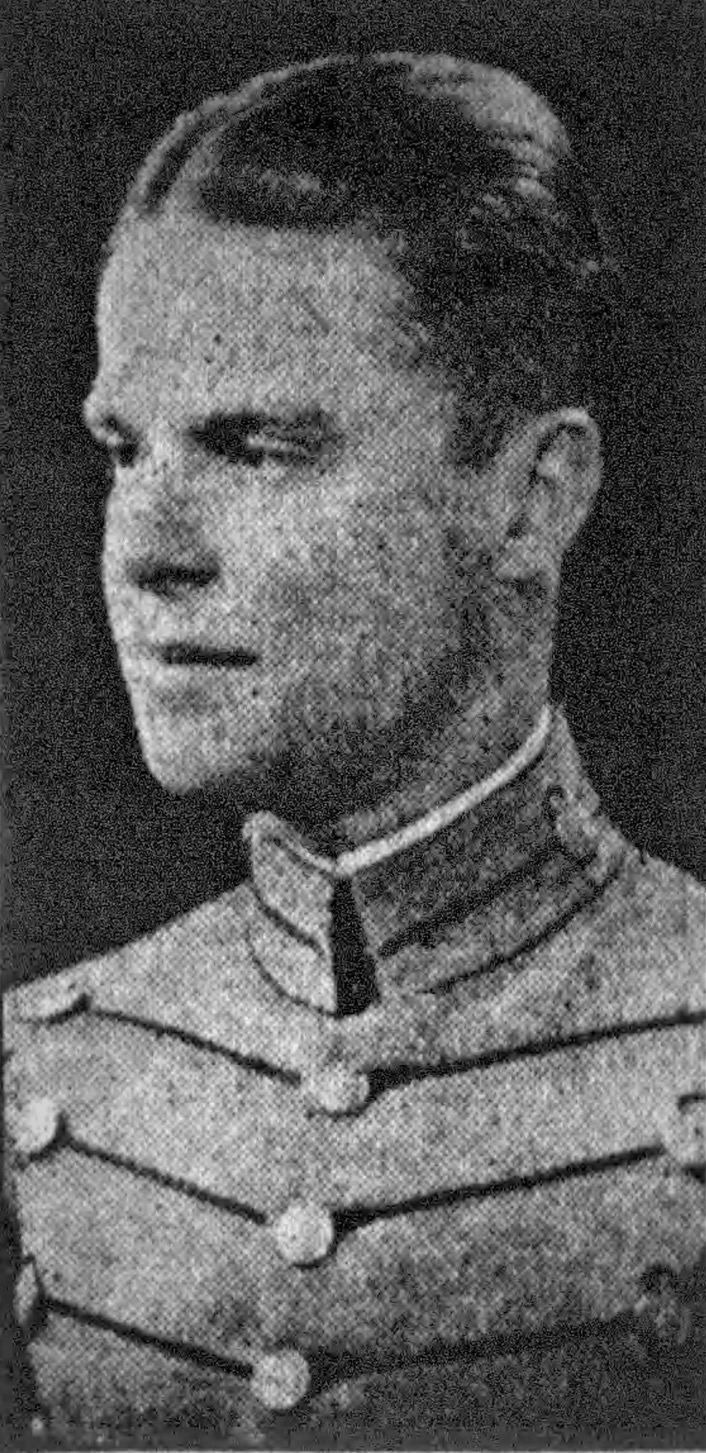
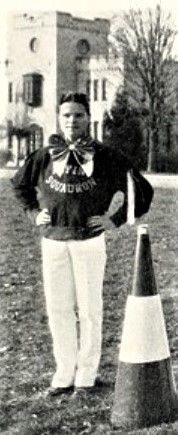
Memorial
“Major Square” is at Saufley Field, Pensacola, Florida. A marker is there with the dates he held command of NAAS Saufley Field: August 25, 1953 to his date of death, May 17, 1955. It has the inscription “He valued duty and fellow man above self.”
Related Articles
Edward Kennedy ‘46 was also lost in this crash.
Navy Directories & Officer Registers
The "Register of Commissioned and Warrant Officers of the United States Navy and Marine Corps" was published annually from 1815 through at least the 1970s; it provided rank, command or station, and occasionally billet until the beginning of World War II when command/station was no longer included. Scanned copies were reviewed and data entered from the mid-1840s through 1922, when more-frequent Navy Directories were available.
The Navy Directory was a publication that provided information on the command, billet, and rank of every active and retired naval officer. Single editions have been found online from January 1915 and March 1918, and then from three to six editions per year from 1923 through 1940; the final edition is from April 1941.
The entries in both series of documents are sometimes cryptic and confusing. They are often inconsistent, even within an edition, with the name of commands; this is especially true for aviation squadrons in the 1920s and early 1930s.
Alumni listed at the same command may or may not have had significant interactions; they could have shared a stateroom or workspace, stood many hours of watch together, or, especially at the larger commands, they might not have known each other at all. The information provides the opportunity to draw connections that are otherwise invisible, though, and gives a fuller view of the professional experiences of these alumni in Memorial Hall.
October 1932
January 1933
April 1933
July 1933
October 1933
April 1934
July 1934
October 1934
January 1935
April 1935
October 1935
January 1936
April 1936
July 1936
January 1937
April 1937
September 1937
July 1938
January 1939
October 1939
June 1940
November 1940
April 1941
Albert is one of 52 members of the Class of 1932 on Virtual Memorial Hall.