LTCOL RALPH HAAS, USMC
Lucky Bag Yearbook
From the 1936 Lucky Bag:
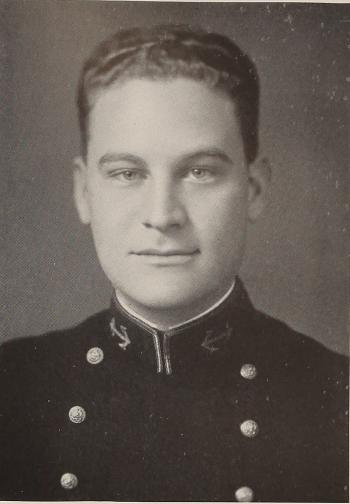
Ralph Haas
Class Football 4, 2, 1; Wrestling 4; Musical Clubs Show 3, 2, 1; Company C.P.O
Loss
Ralph was killed in action on February 20, 1945, in the first night of fighting at Iwo Jima. From NPS.gov:
One high velocity round landed directly in the hole occupied by the 1st Battalion, 23d Marines’ commander, Lieutenant Colonel Ralph Haas, killing him instantly.
Other Information
From the Class of 1936’s “Golden Lucky Bag,” published in 1986 (via Marianne Bradley, daughter of LCDR John Ellis ‘36, USN (Ret.)):
On graduation, Ralph entered the Marine Corps and served successively at Quantico, Virginia; Parris Island, South Carolina; and Coco Solo, Canal Zone. In March 1943, then a Major, he joined the 23rd Regiment, Fleet Marine Force and subsequently participated in the landings at Roi, Namur, and Tinian where he was awarded the Bronze Star.
In 1945, U.S. forces moved against the tiny volcanic island of Iwo Jima in order to secure air strips to aid in the coming B-29 bombing of Japan. Ralph, now a Lieutenant Colonel, led his battalion in the initial assault wave on Yellow Beach with orders to take one of the three air strips. The landing was successful and he set up his command post in a large shell crater. That night the enemy kept up a continuous artillery and mortar barrage, the chief target being the 23rd Regiment. At dawn, 20 February 1942, an artillery shell exploded in Ralph’s command post, killing him and his operations officer.
After the battle, he was interred on the island. Later his remains were returned to the States for reburial on 17 June 1948 at Arlington National Cemetery. As Admiral Nimitz said of the men who died on Iwo Jima, “Uncommon valor was a common virtue.”
From researcher Kathy Franz:
As a freshman, he played saxophone in the sophomore orchestra in 1928 at Gadsden High School. In 1929 he played in the Alabama All State Band. He participated in the 167th Infantry, Alabama National Guard, regimental band in July 1931 and was to go into camp with the regiment in August at Fort McClellan.
His father was Isaac, retail grocery merchant, and his mother was Fedora.
In 1939, as a 1st Lt., he had been designated a naval aviator (#6053).
Of the 24 infantry battalion commanders who went ashore at Iwo Jima on D-Day, only “seven remained unwounded and still retained command at the battle’s end.”
His parents were listed as next of kin. He is buried in Arlington National Cemetery.
Photographs
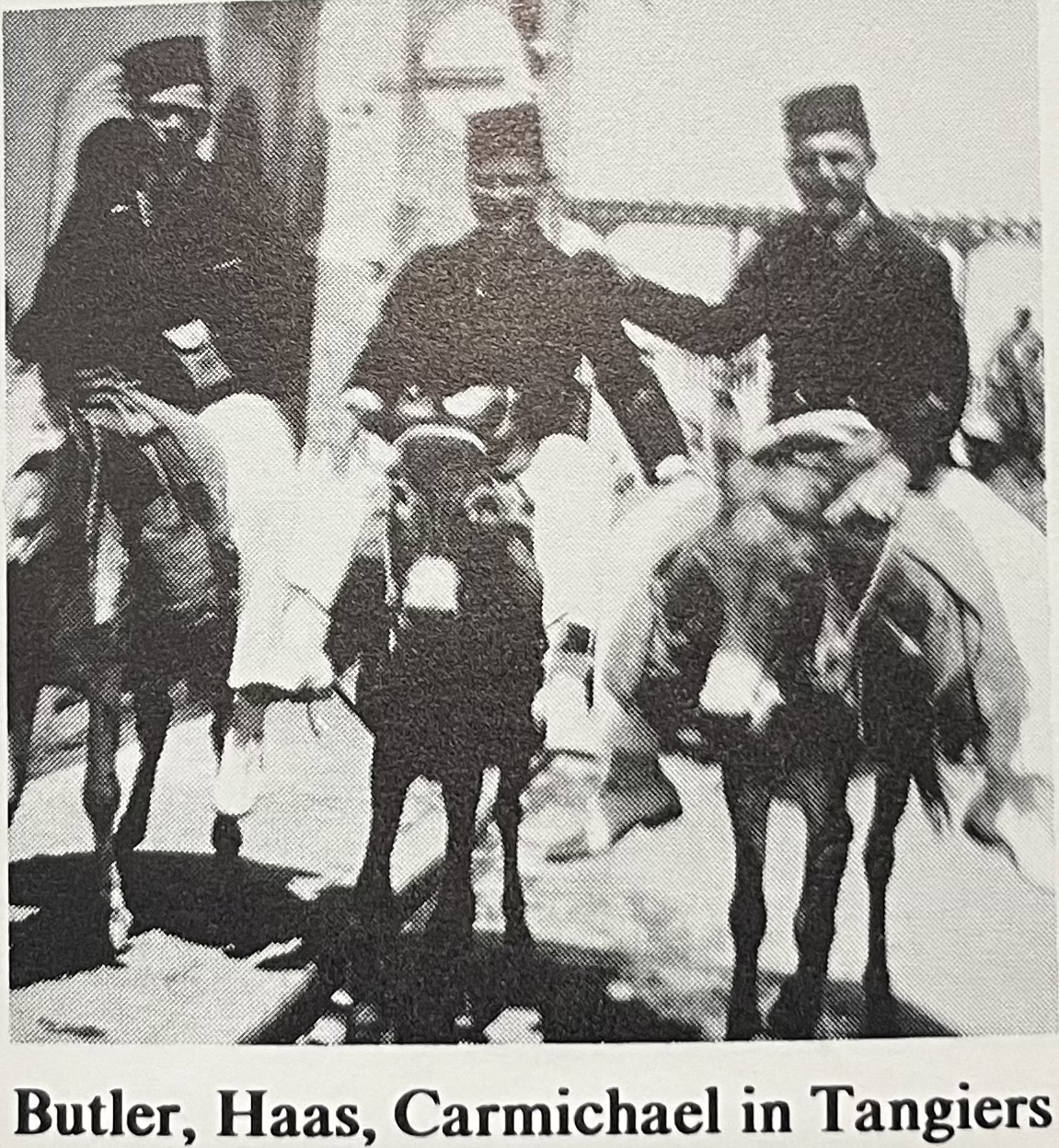
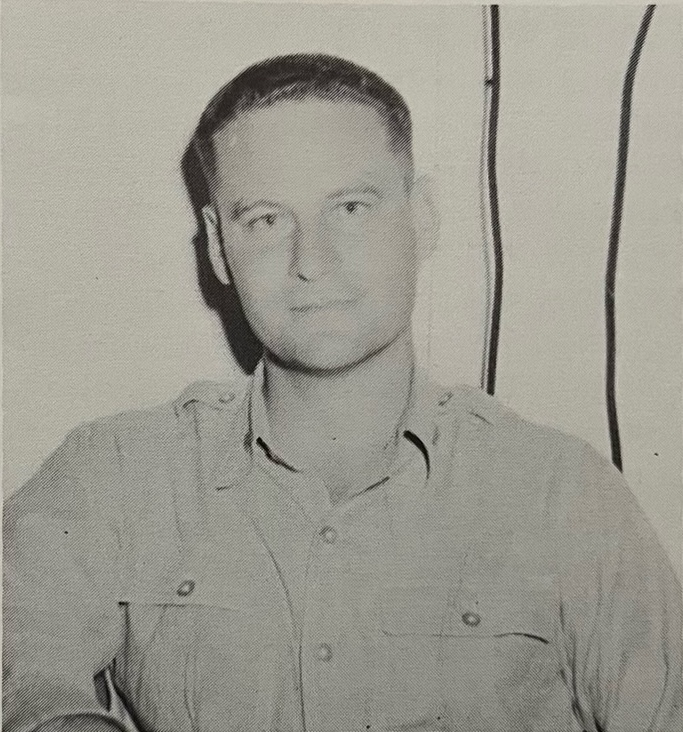
Navy Directories & Officer Registers
The "Register of Commissioned and Warrant Officers of the United States Navy and Marine Corps" was published annually from 1815 through at least the 1970s; it provided rank, command or station, and occasionally billet until the beginning of World War II when command/station was no longer included. Scanned copies were reviewed and data entered from the mid-1840s through 1922, when more-frequent Navy Directories were available.
The Navy Directory was a publication that provided information on the command, billet, and rank of every active and retired naval officer. Single editions have been found online from January 1915 and March 1918, and then from three to six editions per year from 1923 through 1940; the final edition is from April 1941.
The entries in both series of documents are sometimes cryptic and confusing. They are often inconsistent, even within an edition, with the name of commands; this is especially true for aviation squadrons in the 1920s and early 1930s.
Alumni listed at the same command may or may not have had significant interactions; they could have shared a stateroom or workspace, stood many hours of watch together, or, especially at the larger commands, they might not have known each other at all. The information provides the opportunity to draw connections that are otherwise invisible, though, and gives a fuller view of the professional experiences of these alumni in Memorial Hall.
July 1936
January 1937
April 1937
September 1937
January 1938
July 1938
January 1939
October 1939
November 1940
April 1941
Ralph is one of 39 members of the Class of 1936 on Virtual Memorial Hall.