LT ALDEN H. IRONS, USN
Lucky Bag Yearbook
From the 1931 Lucky Bag:
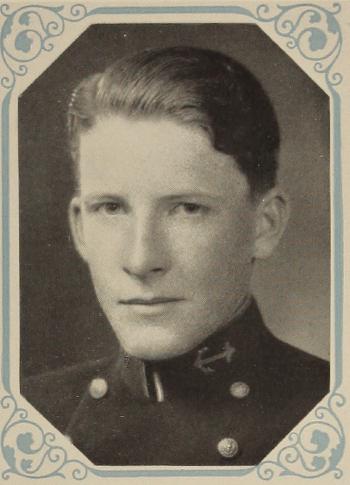
Alden Hatheway Irons
Crew, Plebe 31; Crossed Oar Gymkhana 4; 2 P. O.
BACK in the summer of ‘27 Rusty graduated from Wilmington High School in the spacious state of Delaware and came to Annapolis. His advent, accompanied by a great deal of speculation concerning almost innumerable freckles, was a happy one; and the passing of the years has only deepened our regard for, and admiration of, the “sorrel top.”
Crew was his specialty Plebe Year when he coxwained the ‘31 shell to a memorable victory at Poughkeepsie, bringing back from his trip up the Hudson a flock of jerseys and his very own glass bottomed “beer mug” — but that was before he started growing out of his uniforms.
At almost any odd moment, however, when no bridge games were in progress within walking distance, he could be found absorbed in the contents of the " Saturday Evening Post," or, perchance, looking for the person with similar literary tastes who had discovered his place of concealment of the coveted article.
If good wishes mean anything, his success and happiness are assured.
Loss
Alden, along with five other crewmen, died when their twin-engine PBY patrol bomber crashed in flames after hitting the antennas of the Navy’s long-range radio station located at Chollas Heights, California, near San Diego, on September 7, 1939.
Other Information
From researcher Kathy Franz:
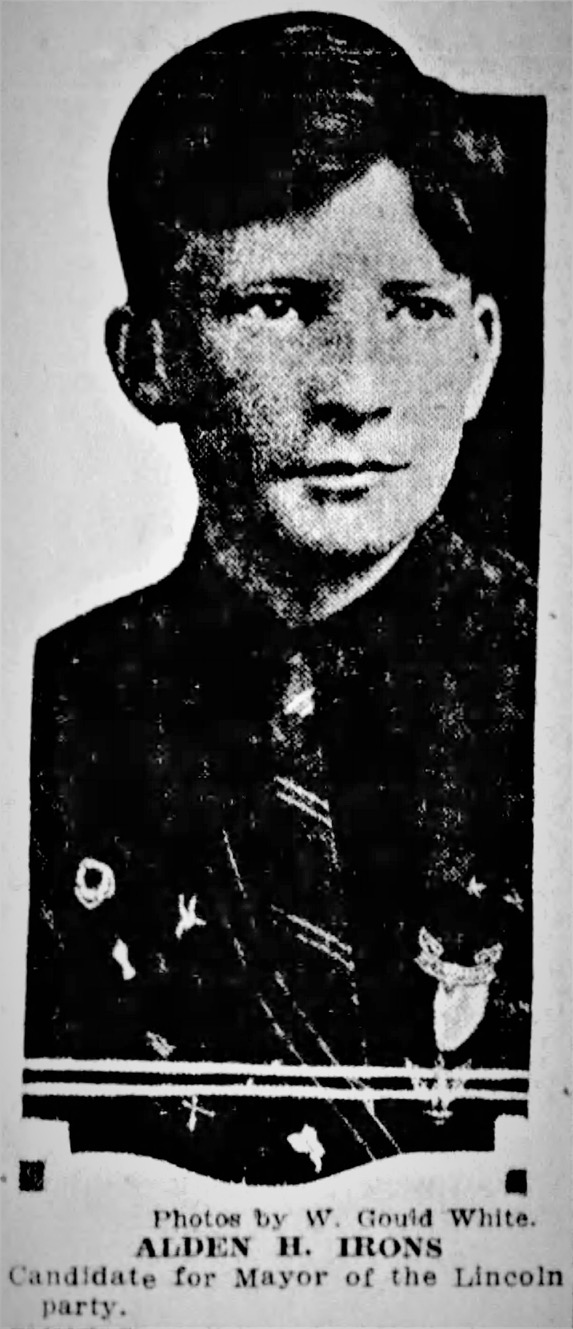
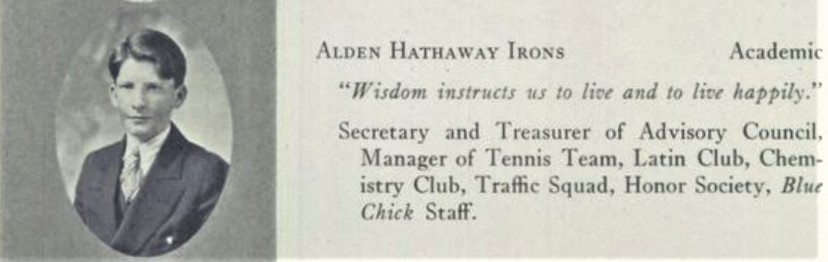
Alden was born in Tennessee and later moved to Wilmington, Delaware. A member of Troop No. 12, he earned the rank of Eagle Scout in February, 1926. At the ceremony, they heard President Coolidge, broadcasting from station WEAF in New York, recite the scout oath to 800,000 boys scouts throughout the country.
In April, Alden ran for mayor but lost to another Boy Scout in a competition. Their speeches were broadcast live by radio.
In June, Alden lost to another in the singles tennis championships at the Wilmington Country Club.
When he was only 16, Alden was appointed to the Naval Academy by Senator Coleman duPont in February, 1927.
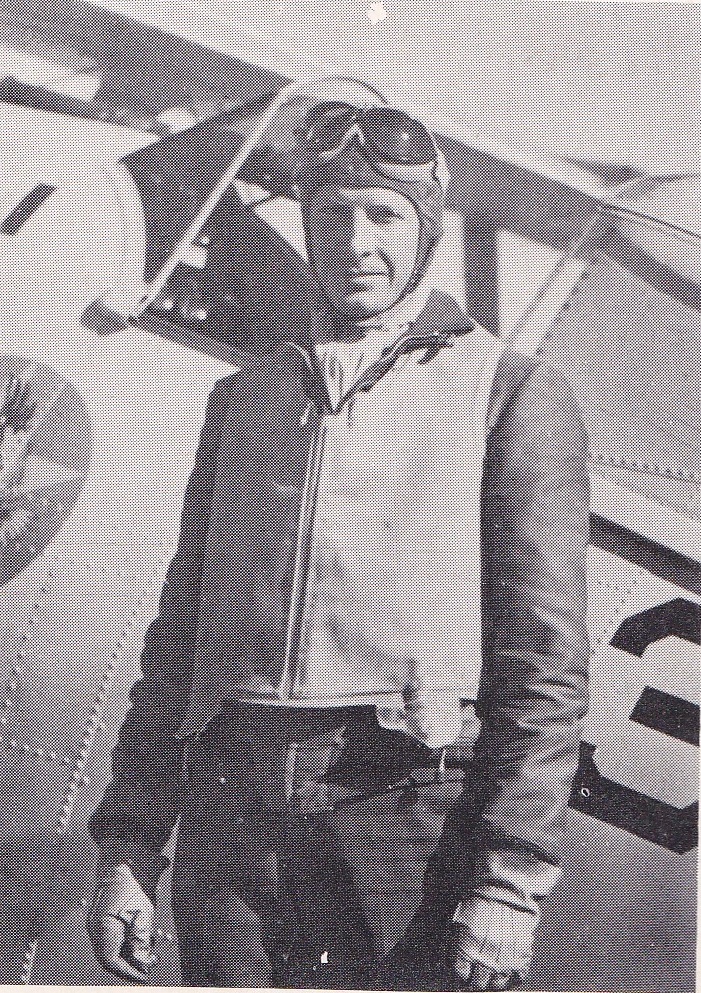
After graduation from the Naval Academy, Alden completed a month’s aviation training at Hampton Roads, Virginia.
In 1920, his father Harold was a buyer for duPont manufacturing. Alden’s mother was Winifred, his brother was Richard. A friend of the family donated money to the Wilmington Public Library to purchase a book as a memorial for Alden. It selected “America’s Heritage.” Alden’s son John married in December, 1956.
From Find A Grave:
Ensign A. H. Irons, USN, was designated Naval Aviator #4039 in 1934. Graduated U.S. Naval Academy, Class of 1931.
Married Mrs. Jane (Henson) Connelly, of San Diego, in 1933.
He is buried in Arlington National Cemetery. He was survived by his wife, a daughter (who died in 2002), and son.
Though this list of PBY-3 Catalinas doesn’t include a squadron (BuNo 0905), a newspaper report says he was a member of Patrol Squadron (VP) 12, Naval Air Station San Diego.
Photographs
Navy Directories & Officer Registers
The "Register of Commissioned and Warrant Officers of the United States Navy and Marine Corps" was published annually from 1815 through at least the 1970s; it provided rank, command or station, and occasionally billet until the beginning of World War II when command/station was no longer included. Scanned copies were reviewed and data entered from the mid-1840s through 1922, when more-frequent Navy Directories were available.
The Navy Directory was a publication that provided information on the command, billet, and rank of every active and retired naval officer. Single editions have been found online from January 1915 and March 1918, and then from three to six editions per year from 1923 through 1940; the final edition is from April 1941.
The entries in both series of documents are sometimes cryptic and confusing. They are often inconsistent, even within an edition, with the name of commands; this is especially true for aviation squadrons in the 1920s and early 1930s.
Alumni listed at the same command may or may not have had significant interactions; they could have shared a stateroom or workspace, stood many hours of watch together, or, especially at the larger commands, they might not have known each other at all. The information provides the opportunity to draw connections that are otherwise invisible, though, and gives a fuller view of the professional experiences of these alumni in Memorial Hall.
April 1932
October 1932
January 1933
April 1933
July 1933
October 1933
April 1934
July 1934
October 1934
January 1935
April 1935
October 1935
January 1936
April 1936
July 1936
January 1937
April 1937
September 1937
January 1938
July 1938
January 1939
Alden is one of 50 members of the Class of 1931 on Virtual Memorial Hall.