LTJG PHILIP H. ASHWORTH, USN
Lucky Bag Yearbook
From the 1931 Lucky Bag:
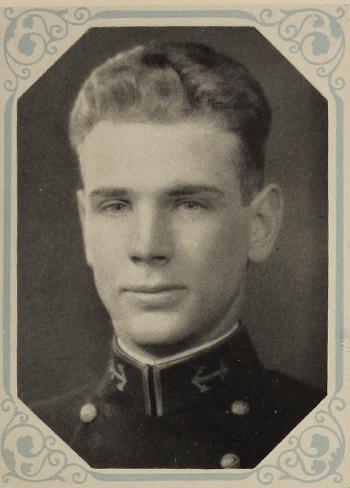
Philip Hamilton Ashworth
Swimming s31t 4; NA 3 N 2; Batt. C. P. O.
Phil is a rather modest and retiring lad who expounds the theory that no better training for the ministry exists than the Naval Academy course. Why, it is hard to say; but that is his story and he stands by it.
Prior to his entry into the Academy he attended school in his home town, spent a year ranching in Bishop Valley, California, and then for a year went to Swaverly School in preparation for his entrance here.
He has done well as a midshipman; for though he is not a brilliant scholar, he manages to dig out his work and has never been behind. He is an excellent swimmer and a valuable asset to the team. Any day in the year finds him in the pool trying to knock another fifth of a second off his time in the fifty or the hundred.
It is hard to put a finger right on every one of his good qualities, but we have only to look at his many friends for proof that they are many!
Loss
Philip was lost on November 17, 1938 in a seaplane crash at Pearl Harbor, Hawaii. Another man aboard was killed, three were injured, and one was uninjured. He was a member of Patrol Squadron (VP) 10, based at Pearl Harbor.
Other Information
From researcher Kathy Franz:
While at the Navy Academy, Philip and his brother Frederick participated in swimming meets. In June, 1929, Philip was men’s high scorer at the meet held at the Palooka Swimming Club of Annapolis. In February 1931, Philip participated in the 100-yard sprint. The two brothers competed in the 200-yard relay with Richard Greene and Ernest Lee Jahncke, Jr., son of the Assistant Secretary of the Navy.
He was married in 1932 to Patricia Louise McSheehy.
In 1940, Philip’s widow and two children, Patricia (age 7) and Barry Hamilton Ashworth (age 2) were living in San Diego.
Their daughter Patricia was married in 1955.
One of Philip’s brothers, Frederick, graduated the Naval Academy in 1933 and went on to a long and distinguished career in the Navy, retiring as a Vice Admiral. Frederick was the weaponeer aboard the B-29 that dropped the atomic bomb on Nagasaki, and later was Commandant of Midshipmen and then Commander, Sixth Fleet.
Photographs
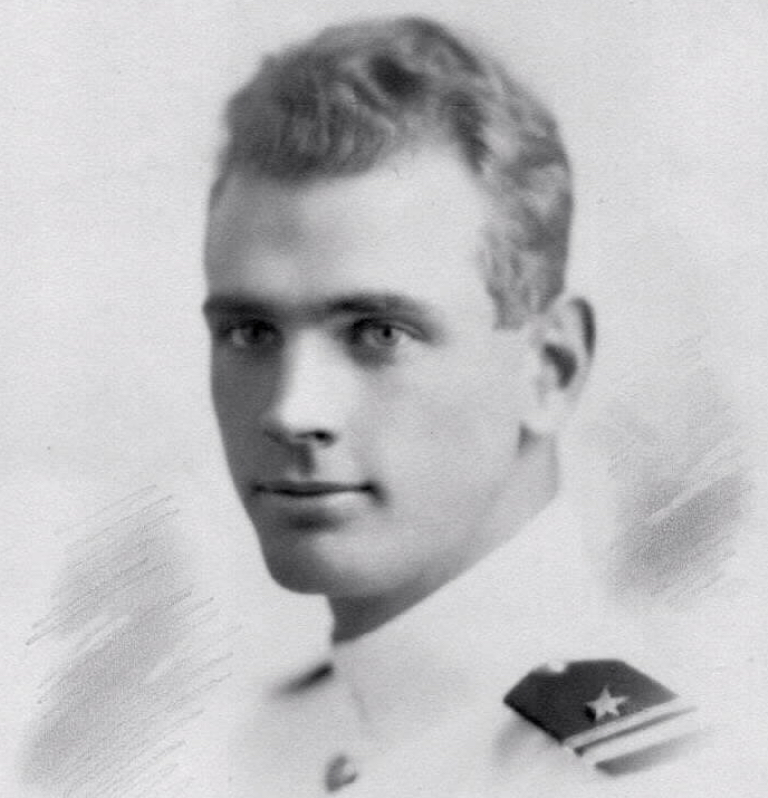
Navy Directories & Officer Registers
The "Register of Commissioned and Warrant Officers of the United States Navy and Marine Corps" was published annually from 1815 through at least the 1970s; it provided rank, command or station, and occasionally billet until the beginning of World War II when command/station was no longer included. Scanned copies were reviewed and data entered from the mid-1840s through 1922, when more-frequent Navy Directories were available.
The Navy Directory was a publication that provided information on the command, billet, and rank of every active and retired naval officer. Single editions have been found online from January 1915 and March 1918, and then from three to six editions per year from 1923 through 1940; the final edition is from April 1941.
The entries in both series of documents are sometimes cryptic and confusing. They are often inconsistent, even within an edition, with the name of commands; this is especially true for aviation squadrons in the 1920s and early 1930s.
Alumni listed at the same command may or may not have had significant interactions; they could have shared a stateroom or workspace, stood many hours of watch together, or, especially at the larger commands, they might not have known each other at all. The information provides the opportunity to draw connections that are otherwise invisible, though, and gives a fuller view of the professional experiences of these alumni in Memorial Hall.
July 1931
October 1931
January 1932
April 1932
October 1932
January 1933
April 1933
July 1933
October 1933
April 1934
July 1934
October 1934
January 1935
April 1935
October 1935
January 1936
April 1936
July 1936
January 1937
April 1937
September 1937
January 1938
July 1938
Philip is one of 50 members of the Class of 1931 on Virtual Memorial Hall.