LCDR JOHN L. PHILLIPS, JR., USN
Lucky Bag Yearbook
From the 1933 Lucky Bag:
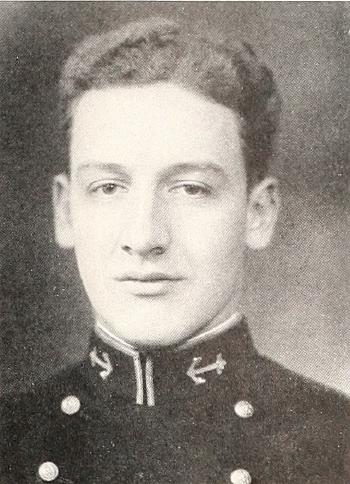
JOHN LLOYD PHILLIPS
Football 4; Crew 4, 3, 2, 1; N Club; 2 P. O.
There isn’t much at Northwestern College way up in Wisconsin to incite a longing for a sea going life. However, that’s where Phil first felt the lust.
He made a step toward the military which, geographically speaking, brought him a little nearer salt water. V.P.I. didn’t quite satisfy the urge though, so John took a bolder step and joined the Navy. At Prep School he polished up some previously acquired knowledge and then confidently took the final step — the one to Crabtown.
So well is he equipped, both mentally and physically, that there have been very few difficulties, if any, in his staying well above the water, except maybe in trying to find time to read all the current novels and magazines.
Phil has a few faults. For instance he couldn’t see how anyone could be so “wooden” as his roommate and it was with the greatest delight that he continually informed said roommate of that fact. Another thing—he is quite willing to sacrifice a few hours sleep any night to talk about crew. He can’t be blamed though. He was a valuable man to the squad.
John is going to be a big success, that is if he cans the women as well as he usually does. Some day he may settle down to an O.A.O. However, at present, he won’t consider such limitations.
Loss
From Find A Grave:
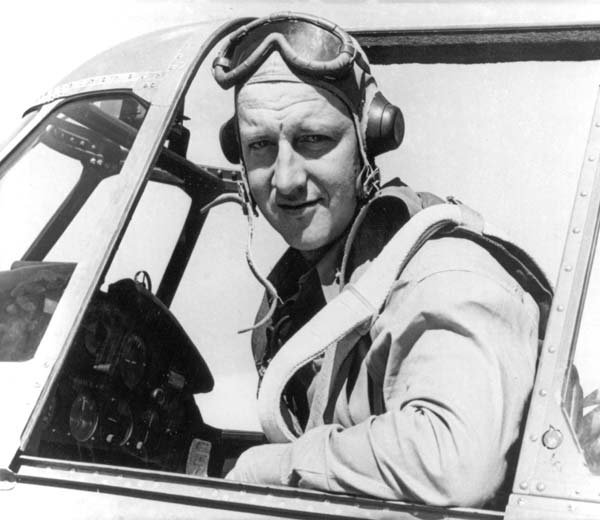
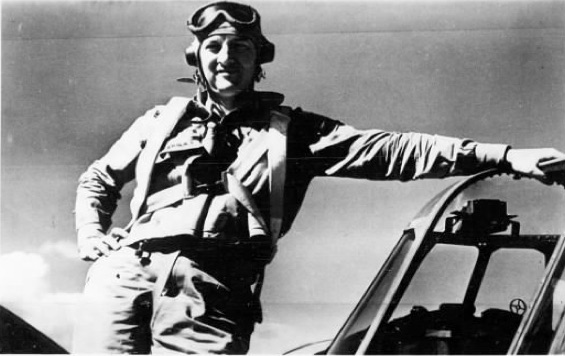
On 16FEB1944, Lt. Cdr. John Phillips was commanding Air Group Six during the attack at the major Japanese fleet base at Truk. Flying an F6F Hellcat from USS INTREPID with Ens. John R. Ogg (BuPers #176896), he was overseeing the strikes against shipping trying to leave the base. Neither Phillips or Ogg returned and no radio contact was heard.
Other Information
From the 1953 edition of the book “Double Three Roundup,” published by the class of 1933:
Phil spent three and a half years in the MARYLAND before going to Pensacola. After receiving his wings in January 1938, he was ordered to VT-6, first in the YORKTOWN, then the ENTERPRISE. He returned to Pensacola as an instructor in September 1940 and in March 1943 was ordered to fit out and command VT-7. This became VT-6 that summer and John became Air Group Six Commander later the same year. His group did much of the pioneering in night tactics for ComAirPac. Phil was lost on 16 February, 1944, after directing the attack against enemy ships and installations in the vicinity of Truk Atoll. He was awarded the Navy Cross, 2 Air Medals and the Purple Heart.
Phil married Eleanore S. Gill from Philadelphia on June 22, 1935, in Seattle, Washington. Their daughter, Eleanore Diane, was born in 1940. Diane resembles her father in many ways; she is active in sports, church and scouts, and is studying piano and dancing.
In 1948 Eleanore married Leonard R. Snyder, who is in the publishing business in Philadelphia. Their address is 8231 Forrest Avenue in Elkins Park, Pennsylvania.
Prior to the war, he was a founding member of Torpedo Squadron (VT) 6 in 1938. Later, he was commanding officer of Torpedo Squadron (VT) 6 from November 10, 1943 until he took command of Air Group (CAG) 6 following the death of “Butch” O’Hare ‘37 in late November 1943.
John was piloting an Avenger torpedo bomber, outfitted with radar, and was credited with two air-to-air kills on the night of November 26, 1943 — one of three American aircraft aloft when Butch O’Hare was killed. For many years John’s radioman/gunner was — likely unfairly — blamed for accidentally shooting down O’Hare.
His wife was listed as next of kin.
Photographs
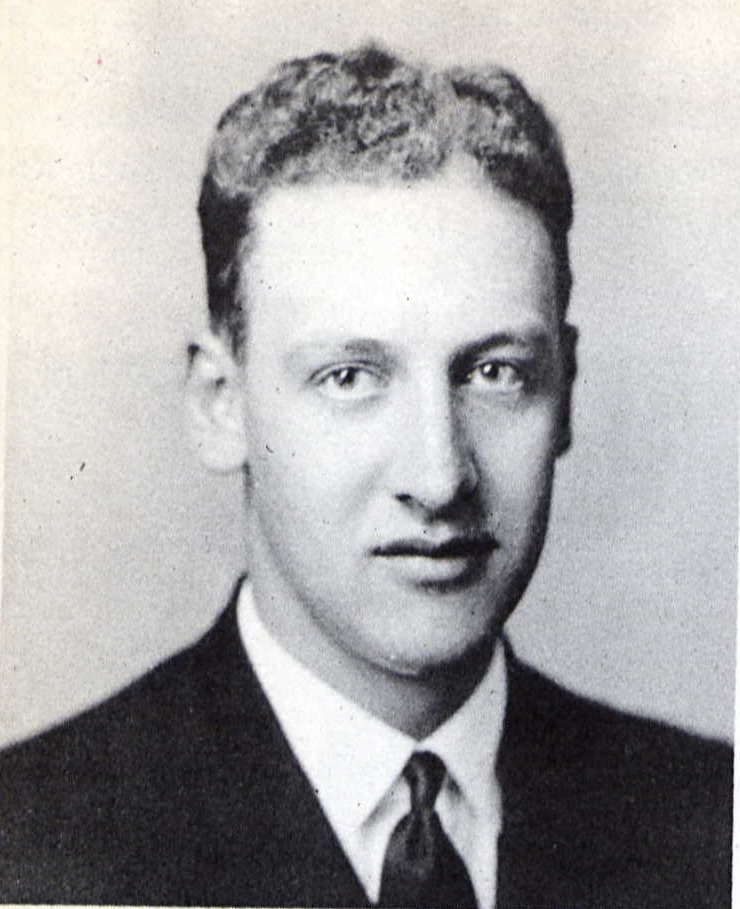
, [Howard Shelton '32](/honorees/lt-howard-e-shelton-usn/), and [Kenneth Hartley '33](/honorees/lcdr-kenneth-j-hartley-usnr/). From The Ithaca Journal on April 20, 1931](/honorees/lcdr-john-l-phillips-jr-usn/1931_Gray_1932_Shelton_1933_Hartley_1933_Phillips_Crew.jpg)
Navy Directories & Officer Registers
The "Register of Commissioned and Warrant Officers of the United States Navy and Marine Corps" was published annually from 1815 through at least the 1970s; it provided rank, command or station, and occasionally billet until the beginning of World War II when command/station was no longer included. Scanned copies were reviewed and data entered from the mid-1840s through 1922, when more-frequent Navy Directories were available.
The Navy Directory was a publication that provided information on the command, billet, and rank of every active and retired naval officer. Single editions have been found online from January 1915 and March 1918, and then from three to six editions per year from 1923 through 1940; the final edition is from April 1941.
The entries in both series of documents are sometimes cryptic and confusing. They are often inconsistent, even within an edition, with the name of commands; this is especially true for aviation squadrons in the 1920s and early 1930s.
Alumni listed at the same command may or may not have had significant interactions; they could have shared a stateroom or workspace, stood many hours of watch together, or, especially at the larger commands, they might not have known each other at all. The information provides the opportunity to draw connections that are otherwise invisible, though, and gives a fuller view of the professional experiences of these alumni in Memorial Hall.
July 1933
July 1934
October 1934
January 1935
April 1935
October 1935
January 1936
April 1936
July 1936
January 1937
April 1937
September 1937
January 1938
July 1938
January 1939
October 1939
June 1940
November 1940
April 1941
Navy Cross
Two sites list John as a recipient of the Navy Cross, but both give the same obviously-wrong citation that has LCDR Butch O’Hare’s name at the end, and also says he died in the action (November 26, 1943).
Several Naval Academy alumni registers list him as a recipient, but have been unable to find contemporary reference to the award.
John is one of 36 members of the Class of 1933 on Virtual Memorial Hall.