LT ROY E. GREEN, JR., USN
Lucky Bag Yearbook
From the 1938 Lucky Bag:
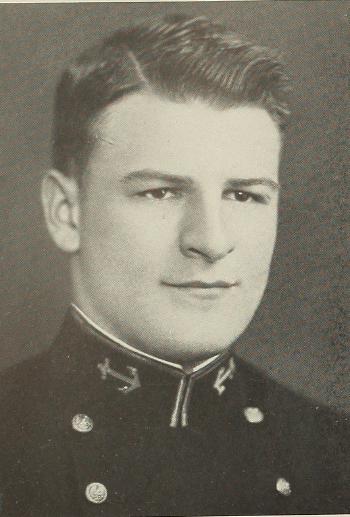
ROY EDWIN GREEN, JR.
Swimming 4, 3, 2, Capt. 1, N; Class Football 4; Trifle 4; Expert Rifleman; Boat Club; N Club; Intercollegiate Life-Saving Society; M.P.O.
Loss
“Peter” was lost when the PBY-5 Catalina patrol bomber he was piloting crashed on July 21, 1942 in the Aleutians shortly after takeoff from Atika. All members of the crew perished.
Other Information
From researcher Kathy Franz:
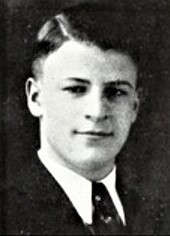
Roy graduated from Whiting High School in 1933. Latin Club 2, 3; Science Club 4; Basketball 3, 4; Football 4; Masque Club 4; Theatre Board 4; Band 1, 2, 3, 4; Swimming 1, 2, 3, 4; Saxophone Sextette 3, 4. In the yearbook, he signed his name as Peter Green. In the 1932 state music contests, he won second place in the bass saxophone solos. In April 1933, Roy set a new state record in the 100 yard breast-stroke at 1:14.8. He was also on the first place 120-yard medley relay team.
From The Times (Indiana) on July 26, 1942:
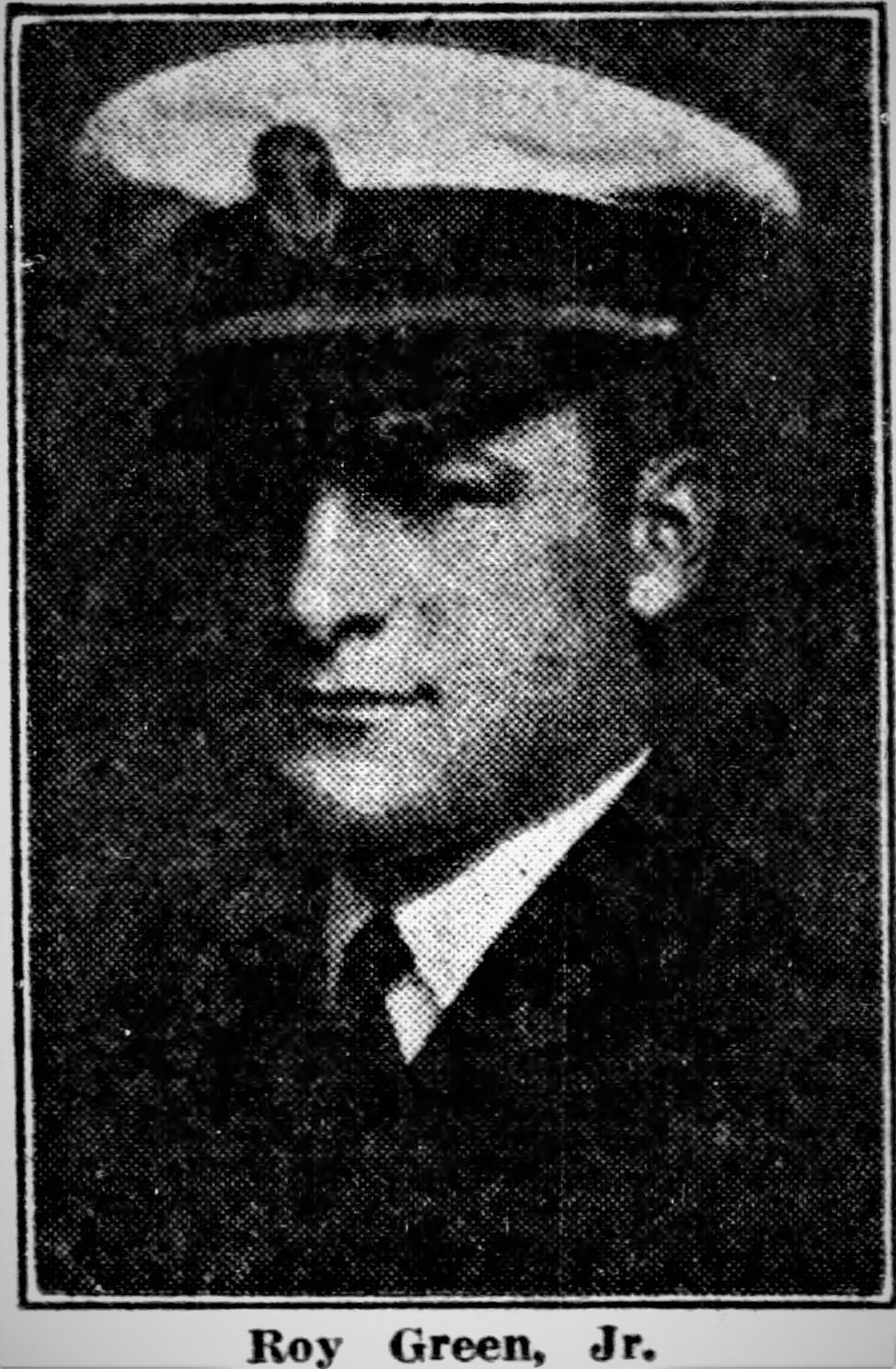
A telephone call across the continent to Atty. and Mrs. Roy Green of Whiting at their summer home in Duneland Beach, Michigan City, from their son’s wife living in San Fransisco, Calif., sent them the news at noon yesterday that their son, Roy Jr., had been killed in action this week in an air battle over the Aleutians.
Lt. Green was recently transferred on short notice from Tong Point, Ore., where he had been stationed since serving as an instructor at San Diego, Calif. His parents had received two letters from him within the last month, but military regulations kept his whereabouts a secret.
Nicknamed “Bruder” by his friends, Lt. Green was a graduate of Whiting school and the U. S. naval academy at Annapolis, Md. He received his commission as a lieutenant within the last month. He was the executive officer of his squadron.
Mr. and Mrs. Roy Green Sr., reside at 1701 Central avenue in Whiting. Green told the Hammond Times last night, four hours after receiving the news: “Don’t give the number of his squadron-it might help the Japs.”
Lt. Green was a graduate at Whiting with the class of 1933 and was one of the school’s outstanding swimming stars. He later set records at Annapolis, which have yet to be beaten.
Young Green also played basketball with the Whiting basketball team under Coach Homer T. Orsborn.
The youth’s father is a former city judge in Whiting and a wellknown attorney in Lake county. He has been active in Republican party activities for several years.
His wife was listed as next of kin. His remains were not recovered.
Career
From naval aviation historian Richard Leonard via email on February 9, 2018:
- NAS Pensacola attached for HTA flight training, 8/26/1940
- NAS Pensacola designated NA # 7250, 3/4/1941
- Date of rank LTJG from 1 Jul 1941 USN Register, 6/2/1941
- Date of rank LT from 1 Jul 1942 USN Register, 6/15/1942
- USS Casco (AVP-12) received from VP-43 for transport NAS Dutch Harbor, 7/8/1942
- USS Casco (AVP-12) transfer to VP-43 for transport complete, 7/9/1942
- USS Casco (AVP-12) received from VP-43 for transport operating area, 7/17/1942
- USS Casco (AVP-12) transfer to VP-43 PatWing4 Nazan Bay, 7/18/1942
- VP-43 PatWing4 Chernofsky Harbor Unalaska KIFA BNR, 7/21/1942
Distinguished Flying Cross
From Hall of Valor:
(Citation Needed) - SYNOPSIS: Lieutenant Roy E. Green, Jr. (NSN: 0-81359), United States Navy, was awarded the Distinguished Flying Cross for extraordinary achievement while participating in aerial flight during World War II.
General Orders: American Battle Monuments Commission
Action Date: World War II
Service: Navy
Rank: Lieutenant
Photographs
Related Articles
Peter was best man at the wedding of Frank Quady ‘38; they overlapped for a week in November 1940 at NAS Pensacola and again briefly in Coronado, California.
Navy Directories & Officer Registers
The "Register of Commissioned and Warrant Officers of the United States Navy and Marine Corps" was published annually from 1815 through at least the 1970s; it provided rank, command or station, and occasionally billet until the beginning of World War II when command/station was no longer included. Scanned copies were reviewed and data entered from the mid-1840s through 1922, when more-frequent Navy Directories were available.
The Navy Directory was a publication that provided information on the command, billet, and rank of every active and retired naval officer. Single editions have been found online from January 1915 and March 1918, and then from three to six editions per year from 1923 through 1940; the final edition is from April 1941.
The entries in both series of documents are sometimes cryptic and confusing. They are often inconsistent, even within an edition, with the name of commands; this is especially true for aviation squadrons in the 1920s and early 1930s.
Alumni listed at the same command may or may not have had significant interactions; they could have shared a stateroom or workspace, stood many hours of watch together, or, especially at the larger commands, they might not have known each other at all. The information provides the opportunity to draw connections that are otherwise invisible, though, and gives a fuller view of the professional experiences of these alumni in Memorial Hall.
July 1938
January 1939
November 1940
April 1941
Roy is one of 72 members of the Class of 1938 on Virtual Memorial Hall.