LCDR JOHN E. DUNN, USN
Lucky Bag Yearbook
From the 1939 Lucky Bag:
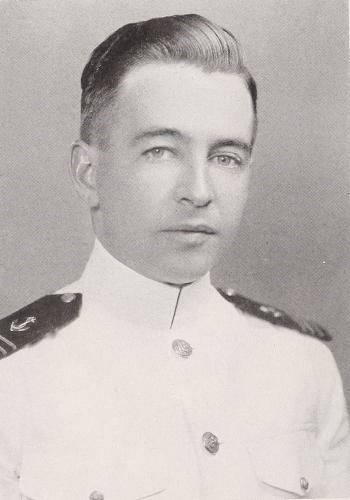
JOHN EDWARD DUNN
Battalion Lacrosse 3, 2, 1 : Battalion Soccer 3, 1 ; Battalion Boxing 1; 1 Stripe.
Loss
John was lost on December 13, 1946 when his plane collided with another one mile northeast of Monogram Field, near Suffolk, Virginia. His plane crashed, but the pilot of the other plane parachuted to safety.
Other Information
From “Gold Star Wives of America:”
Marie Deaton (Dunn) Liechty, was born in Shreveport, LA April 22, 1922. Met John Edward Dunn in Miami, FL spring of 1946. Marie was a stewardess with National Airlines. Cmdr. Dunn was in Naval flight training, Miami, FL. They were married Nov. 7, 1946, Naval Air Station Chapel, in Norfolk, VA.
(Note: there is more in this book, but it makes extremely far-fetched claims unsupported by any other evidence: specifically, that John was awarded the Congressional Medal of Honor and escaped captivity three times before serving in the French Underground.) His widow remarried another alumni.
From researcher Kathy Franz:
John graduated in 1933 from New Haven High School. “Dunnie” Prepared at Broadway Grammar School, Norwich. Activities: French Club (3); Honors (3); World Affairs Club (4); Future: Annapolis. Hobby: Swimming and golf.
In 1930, his father William was a machinist at a screw company, mother Catherine. He had two sisters: Mildred was a bank worker and Alice was a private home nurse. His brother William was a machinist like his father.
John is buried in Arlington National Cemetery. (His headstone gives his last name as “Dunne”, but this is the only time this spelling is used in any document, report, or citation.)
Wartime Service
John was flying from USS Wasp (CV 7) when he made a navigation error and was forced to ditch in the sea off of Norway. He was captured by German forces and spent the remainder of the war in Germany.
Photographs
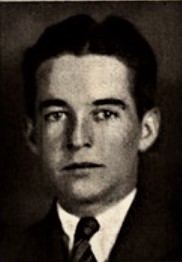
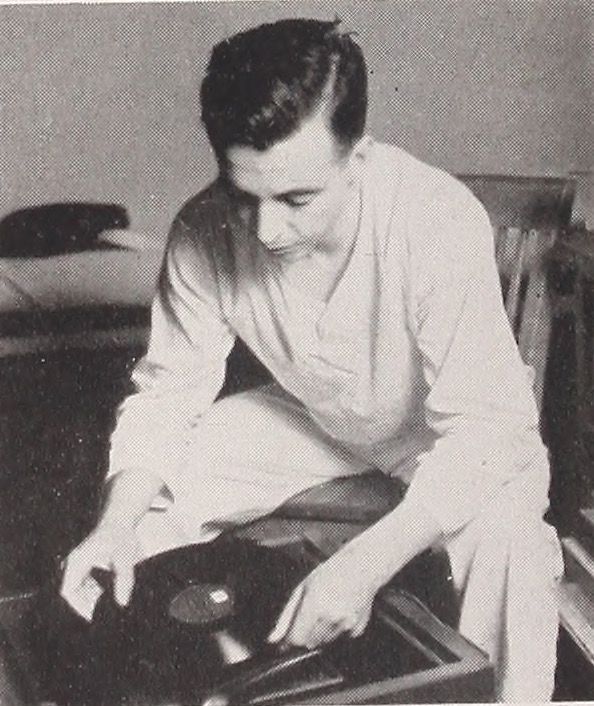
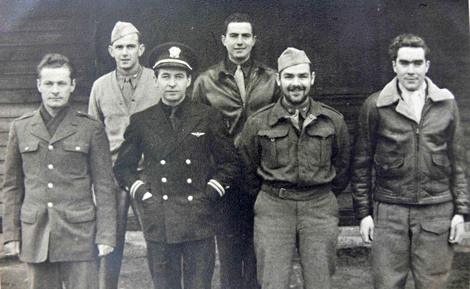
Legion of Merit
From Hall of Valor:
SYNOPSIS: Lieutenant John E. Dunn (NSN: 0-82354), United States Navy, was awarded the Legion of Merit for exceptionally meritorious conduct in the performance of outstanding services to the Government of the United States while a Prisoner of War in Germany. Lieutenant Dunn rendered outstanding service to the United States and to our prisoners of war from 14 April 1943 to 29 April 1945.
General Orders: Bureau of Naval Personnel Information Bulletin No. 345 (December 1945)
Action Date: April 14, 1943 - April 29, 1945
Service: Navy
Rank: Lieutenant
Division: Prisoner of War (Bavaria)
Prisoner of War Medal
From Hall of Valor:
Lieutenant, Junior Grade John E. Dunn (NSN: 0-82354), United States Navy, was captured in and held as a Prisoner of War by the Germans until his release at the end of hostilities on 29 April 1945.
General Orders: NARA Database: Records of World War II Prisoners of War, created, 1942 - 1947
Action Date: April 14, 1942 - April 29, 1945
Service: Navy
Rank: Lieutenant Junior Grade
Division: Prisoner of War (Bavaria)
Navy Directories & Officer Registers
The "Register of Commissioned and Warrant Officers of the United States Navy and Marine Corps" was published annually from 1815 through at least the 1970s; it provided rank, command or station, and occasionally billet until the beginning of World War II when command/station was no longer included. Scanned copies were reviewed and data entered from the mid-1840s through 1922, when more-frequent Navy Directories were available.
The Navy Directory was a publication that provided information on the command, billet, and rank of every active and retired naval officer. Single editions have been found online from January 1915 and March 1918, and then from three to six editions per year from 1923 through 1940; the final edition is from April 1941.
The entries in both series of documents are sometimes cryptic and confusing. They are often inconsistent, even within an edition, with the name of commands; this is especially true for aviation squadrons in the 1920s and early 1930s.
Alumni listed at the same command may or may not have had significant interactions; they could have shared a stateroom or workspace, stood many hours of watch together, or, especially at the larger commands, they might not have known each other at all. The information provides the opportunity to draw connections that are otherwise invisible, though, and gives a fuller view of the professional experiences of these alumni in Memorial Hall.
October 1939
June 1940
November 1940
April 1941
John is one of 79 members of the Class of 1939 on Virtual Memorial Hall.