LCDR STEPHEN B. COOKE, USN
Lucky Bag Yearbook
From the 1921 Lucky Bag:
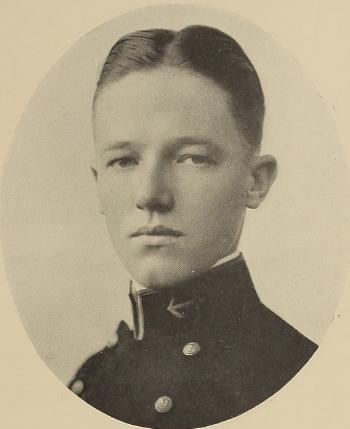
Stephen Bland Cooke
Two Stripes; Buzzard (2); Track Squad (2, 1); Manager (1); Reina (4).
“BOYS, have you heard the dope. . . .” Yes, you guessed it the first time, for Steve never fails to start off LIKE that. If you will listen to him he will tell you more dope in a minute than a man less fortunate than Methuselah could think of in his entire lifetime.
Academically speaking the boy is in ‘21-B and not ashamed of it either. If argument wasn’t enough to get the necessary 2.5 Steve would tell the Prof some new dope on the raise in pay bill and as we intimated before he is a dope artist of no mean ability.
We’ve often wondered how it is possible for an ordinary human being to think of as many things to talk about as Steve does, but after getting better acquainted with him we discovered that it makes very little difference to him whether he actually has something to talk about or not. His only worry is being able to find a good listening ear.
As manager of track, S. B. was in his element, for the visiting teams had to be entertained and before they left our midst they usually had to admit that he knew what he was talking about in matters pertaining to track. A more enthusiastic manager couldn’t have been found. He had a big job and he did it well.
Loss
Stephen was lost on January 4, 1941 when the transport plane he was aboard crashed near San Diego.
Other Information
From The Brownsville Herald on January 6, 1941:
RESCUE PLANE KILLS ELEVEN
Fog Blamed As Cause Of Crash SAN DIEGO, Calif. –(AP)– Civil and naval officials, poking through the scattered wreckage of a $120,000 navy transport plane, asserted Monday that had the big ship been flying 20 feet higher it would have cleared the rugged Mother Grundy range and reached its destination only 20 miles away with all 11 occupants safe.
The navy arranged for an official investigation of the crash that killed everybody aboard, including four who had escaped death only last Thursday in a Texas bomber mishap. Civilian aviation observers generally blamed weather conditions. A low ceiling and dense fog made flying conditions hazardous in the area, some 35 miles southeast of here, and reports of neighboring ranchers said the pilot might have gotten off his radio beam.
Plane Gunned
Residents of the Simpson ranch two miles from White Mountain, the crash scene, said they heard a plane being “gunned” to gain altitude a few moments before they heard an explosion, and this brought the observation that a pilot off his beam, believing him self over San Diego because of a zone of silence, might have started down, realized his position and attempted to climb out of danger.The craft struck just 20 feet below the ridge, exploded and burned. Wreckage was hurled over the top of the 3000-foot granite summit and scattered over a half-mile area. The big plane, en route to the naval air station here, carried three members of a board of inquiry appointed to investigate the Texas accident, and the four survivors of that previous mishap. The four had parachuted to safety when their bomber, being ferried from here to Pensacola, Fla., by way of corpus Christi, Tex., encountered a severe storm. A fifth crew member “bailed out” but was killed when his ‘chute failed to open. The pilot and co-pilot, who risked their lives to ride out the storm and land the ship on a small pond, proved ultimately to be the only survivors of the seven aboard the bomber.
Dead The dead were Lt. Comdr. Joseph Henry Gowan, 54, Head Hill, Ark., pilot David Everett Ferguson, 33, Neponset, W. Va., co-pilot; Lt. Cmdr. Stephen Bland Cooke, 42, Harrison, Ark., Lieut. Victor S. Gaulin, 34, Lowell, Mass., and Lieut. James Cyril Flemming, 36, Reading, Pa., members of the board of inquiry; Frank Recke, Jr.. 30, National City, Calif,, L. J. Hughes, 30, Grand Rapids, Mich.. H. B. Neff, 34, San Diego, and A. M. Parry, 31, Los Angeles, survivors of the Texas mishap; and Marvin Magee, 32, Long Branch, N, J,, and Frank Richard Naylor, 25, Dayton, Ky., crew members of the wrecked transport plane.
He was the commanding officer of Patrol Squadron (VP) 13, Norfolk, VA; he assumed that command on July 5, 1939. He had been selected “that day” to be commander and head of a board of inquiry of the earlier crash.
From researcher Kathy Franz:
Stephen married Mrs. Jane Aldrich Greene, a widow, on September 16, 1922, in Orange County, California.
Next, he married Mrs. Marguerite Kathryn Fraine Whybark on February 18, 1926, in Honolulu. They had four sons Leroy, Stephen, Jr., George and Donald. They divorced on June 28, 1939, and she died in 1985.
On July 29, 1939, Stephen married Dorothea Dyer Everett in Washington, D. C. She had divorced her husband Carl in Des Moines, Iowa, in early 1939. She was with the Federal Housing administration in Des Moines.
Stephen’s brother Charles Maynard Cooke (’10) was the hero of the submarine S-5 disaster in 1920. Brother John was a captain on a submarine in 1920, and in 1940, he was a newly elected California Assemblyman. Brother William became an accountant for the railroad in Kansas City Southern Railroad. He served in the Missouri National Guard during WWI. Their father was Charles Maynard Cooke, attorney and former mayor of Fort Smith, Arkansas. Stephen’s sisters were Helen and Cornelia. His maternal grandfather was John Bleecker Luce, and his great uncle was Rear Admiral Stephen Bleecker Luce (Naval Academy graduate #173, Class of 1848.)
Stephen was survived by his wife, Dorothea, his son, Stephen Jr., his father, a sister, and two brothers, one of whom retired an Admiral.
Photographs
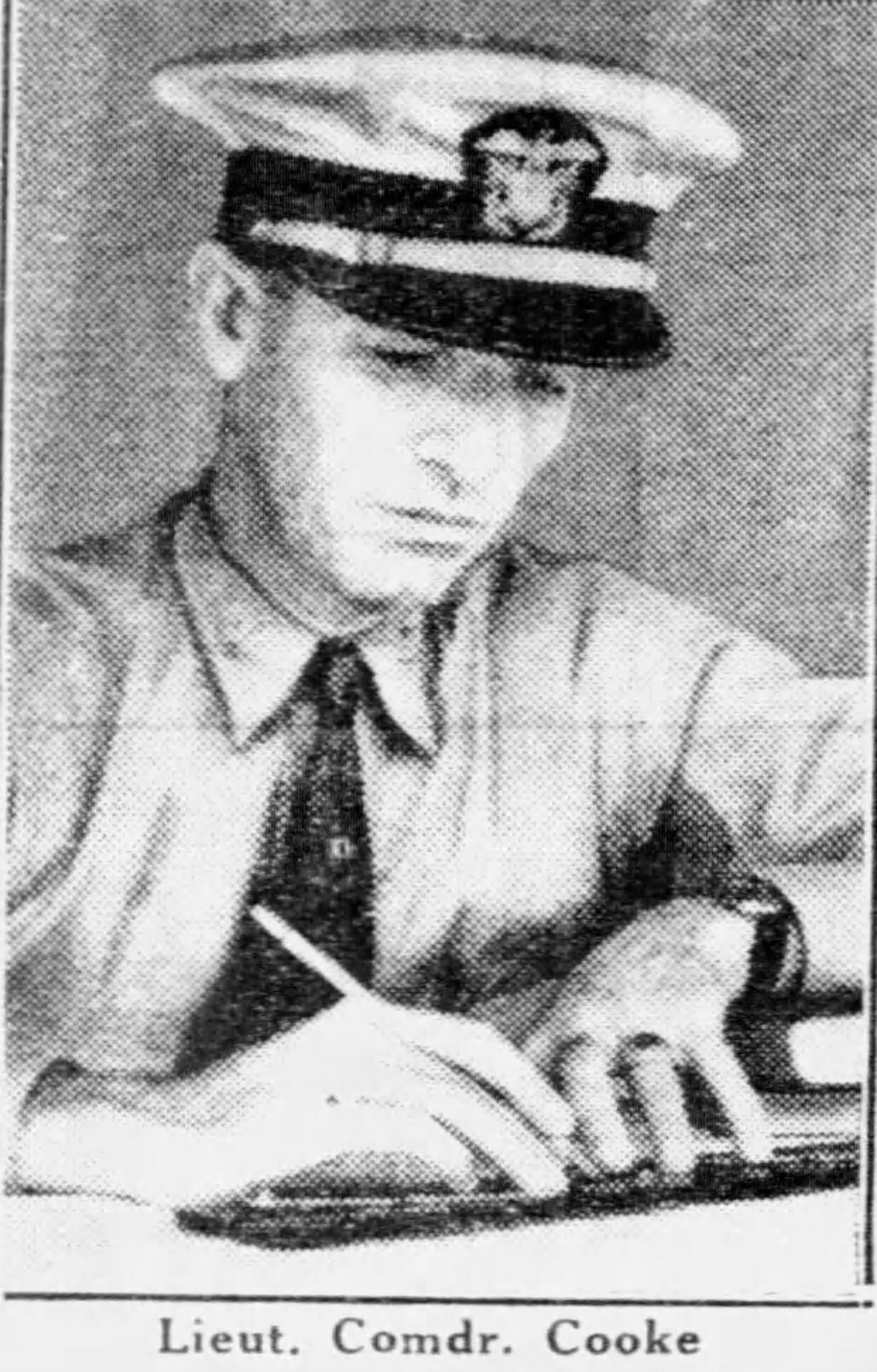
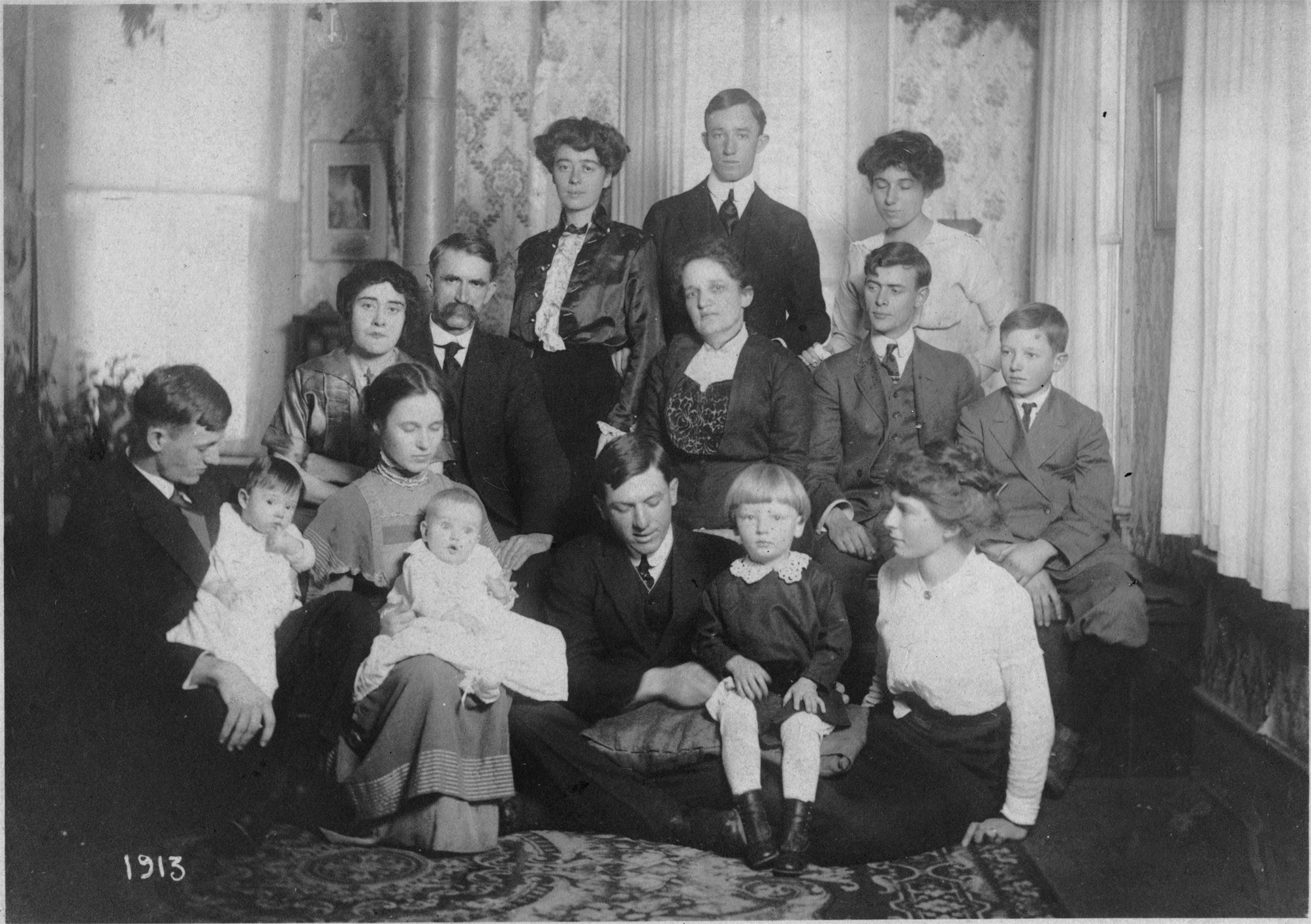
Related Articles
Victor Gaulin ‘30 was also lost in this crash.
Navy Directories & Officer Registers
The "Register of Commissioned and Warrant Officers of the United States Navy and Marine Corps" was published annually from 1815 through at least the 1970s; it provided rank, command or station, and occasionally billet until the beginning of World War II when command/station was no longer included. Scanned copies were reviewed and data entered from the mid-1840s through 1922, when more-frequent Navy Directories were available.
The Navy Directory was a publication that provided information on the command, billet, and rank of every active and retired naval officer. Single editions have been found online from January 1915 and March 1918, and then from three to six editions per year from 1923 through 1940; the final edition is from April 1941.
The entries in both series of documents are sometimes cryptic and confusing. They are often inconsistent, even within an edition, with the name of commands; this is especially true for aviation squadrons in the 1920s and early 1930s.
Alumni listed at the same command may or may not have had significant interactions; they could have shared a stateroom or workspace, stood many hours of watch together, or, especially at the larger commands, they might not have known each other at all. The information provides the opportunity to draw connections that are otherwise invisible, though, and gives a fuller view of the professional experiences of these alumni in Memorial Hall.
January 1922
May 1923
July 1923
September 1923
November 1923
January 1924
March 1924
May 1924
July 1924
September 1924
November 1924
January 1925
March 1925
May 1925
October 1926
January 1927
April 1927
October 1927
April 1928
July 1928
October 1928
January 1929
April 1929
July 1929
October 1929
January 1930
April 1930
October 1930
January 1931
April 1931
July 1931
October 1931
April 1932
October 1932
January 1933
April 1933
July 1933
October 1933
April 1934
July 1934
October 1934
January 1935
April 1935
October 1935
January 1936
April 1936
July 1936
January 1937
April 1937
September 1937
January 1938
July 1938
January 1939
October 1939
June 1940
November 1940
Stephen is one of 28 members of the Class of 1921 on Virtual Memorial Hall.