LCDR SIDNEY L. SMITH, USN
Lucky Bag Yearbook
From the 1926 Lucky Bag:
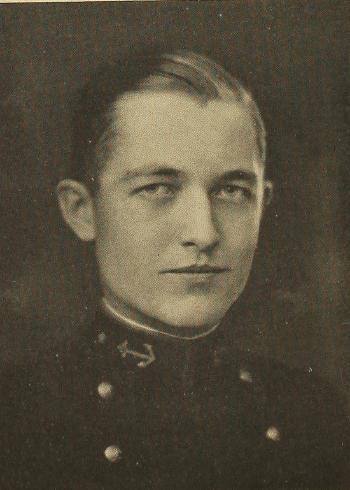
Sidney Layton Smith
Choir (4); Star (4, 3); Class Soccer (2); Lucky Bag Staff; Black N (1).
Sid is the son of a veteran of two wars. His father once navigated a bateau from Cienfuegos to Key West, without a compass. Sid promises to be as seaworthy, for he knows the Navy from stem to stern.
Though easy going and cheerful, this lad has not been without his troubles since he became one of the spoiled and pampered pets. A too damp combat, with the First Class, on the night before graduation gave Sid a rough start on a hard Youngster cruise, which was destined to be filled with visions of a leaveless September. Another hectic time in his life came when he fell heir to two stripes after the Army-Navy tilt Youngster year. He was able, however, to lead his platoon safely back to Crabtown.
The only thing Sid ever kicked about, besides a delay in receiving the daily paper, was a soccer ball for the class team. His comprehensive limbs and adequate feet probably led him to that field, where men shout and shins are broken.
“Judas rip! No soap! And I didn’t get but three letters yesterday.”
Loss
Sidney was lost when USS Houston (CA 30) was sunk on on March 1, 1942 during the Battle of Sunda Strait. He was the ship’s gunnery plotting room officer.
Other Information
From Find A Grave:
S. L. Smith was a Commander in the United States Navy. He was the son of Layton Fontaine Smith and Mary Alexander Beasley Smith - born and brought up in Maryland in the household of his mother’s parents. He attended the U.S. Naval Academy. When he was 23, he married Katherine L. Bechtold Smith and in 1930 they were living with her parents. Sidney and Katherine had two sons Sidney L. Smith Jr. and Gordon Leigh Smith who was born March 6 1935.
He was not officially declared dead until December 15, 1945; this may explain his late listing on the Class of 1926 panel in Memorial Hall.
Sidney’s wife was listed as next of kin.
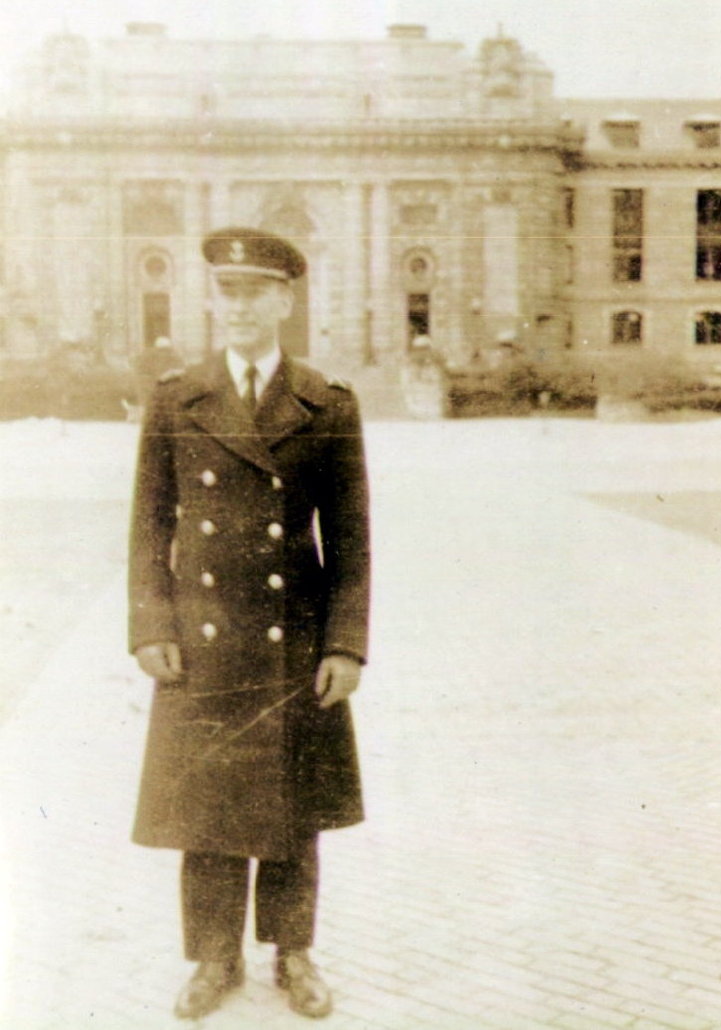
Photographs
Navy Directories & Officer Registers
The "Register of Commissioned and Warrant Officers of the United States Navy and Marine Corps" was published annually from 1815 through at least the 1970s; it provided rank, command or station, and occasionally billet until the beginning of World War II when command/station was no longer included. Scanned copies were reviewed and data entered from the mid-1840s through 1922, when more-frequent Navy Directories were available.
The Navy Directory was a publication that provided information on the command, billet, and rank of every active and retired naval officer. Single editions have been found online from January 1915 and March 1918, and then from three to six editions per year from 1923 through 1940; the final edition is from April 1941.
The entries in both series of documents are sometimes cryptic and confusing. They are often inconsistent, even within an edition, with the name of commands; this is especially true for aviation squadrons in the 1920s and early 1930s.
Alumni listed at the same command may or may not have had significant interactions; they could have shared a stateroom or workspace, stood many hours of watch together, or, especially at the larger commands, they might not have known each other at all. The information provides the opportunity to draw connections that are otherwise invisible, though, and gives a fuller view of the professional experiences of these alumni in Memorial Hall.
October 1926
January 1927
April 1927
October 1928
January 1929
April 1929
July 1929
October 1929
January 1930
April 1930
October 1930
January 1931
April 1931
July 1931
October 1931
January 1932
April 1932
October 1932
January 1933
April 1933
July 1933
October 1933
April 1934
July 1934
October 1934
January 1935
April 1935
October 1935
January 1936
September 1937
January 1938
July 1938
January 1939
October 1939
June 1940
November 1940
April 1941
Sidney is one of 33 members of the Class of 1926 on Virtual Memorial Hall.