CDR JOHN A. HOLLOWELL, JR., USN
Lucky Bag Yearbook
From the 1922 Lucky Bag:
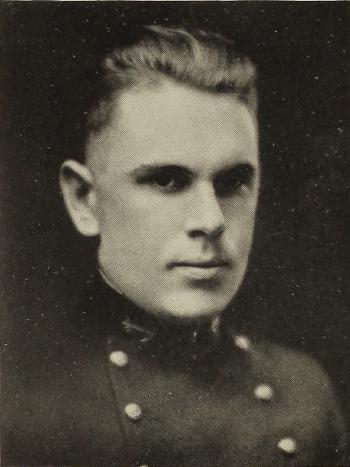
JOHN AMBROSE HOLLOWELL, JR.
Gold Masked N; Stage Manager Masqueraders (2, 1).
AMBROSE came to us from Tennessee, but at that he’s not without ambition. He is a firm believer in, and a living example of, the “Solid South.” Constant contact with civilization, however, showed him the great handicap beneath which he was laboring so that he changed his residence to Norfolk,—a move in the right direction, but not far enough. A few more shifts an’—by the way, he’s some shifter. Listen! He’ll tell you himself: “My gang shifted that last scene in one minute flat. Professionals saw something they rarely read about.”
Ambrose is noted for remarkably poor argumentative powers, a sorrowful accent, and not knowing that the Civil War is over. Nevertheless, he is the best of roommates; his heart is big and his opinions are changing. Why, he’s even going to drag sometime—maybe.
Loss
John was lost when USS Houston (CA 30) was sunk on March 1, 1942 during the Battle of Sunda Strait. He was the ship’s navigator.
Other Information
From researcher Kathy Franz:
On June 16, 1932, John married Doris Gasque, daughter of Representative and Mrs. Allard Gasque of South Carolina. The marriage was performed at the First Baptist Church in Washington, D. C. On June 25, John and Doris sailed from Seattle to Cavite, Philippines, where he would take command of the U. S. S. Pigeon.
Their two children were Faith, born in Granada, Philippines, in 1935 and John, Jr., born in the spring of 1939 in Norfolk.
John’s father was prominent in Masonic circles when they lived in Memphis Tennessee. John’s mother was Eda, and his brother Otto was best man at John’s wedding.
His wife was listed as next of kin.
Remembrances
In “Ship of Ghosts”, he is quoted responding to a sailor where they were going: “In a fatherly way, he draped his arm around my shoulder and, as though talking to himself, said, ‘Son, we’re going to hell, we’re going to hell.’”
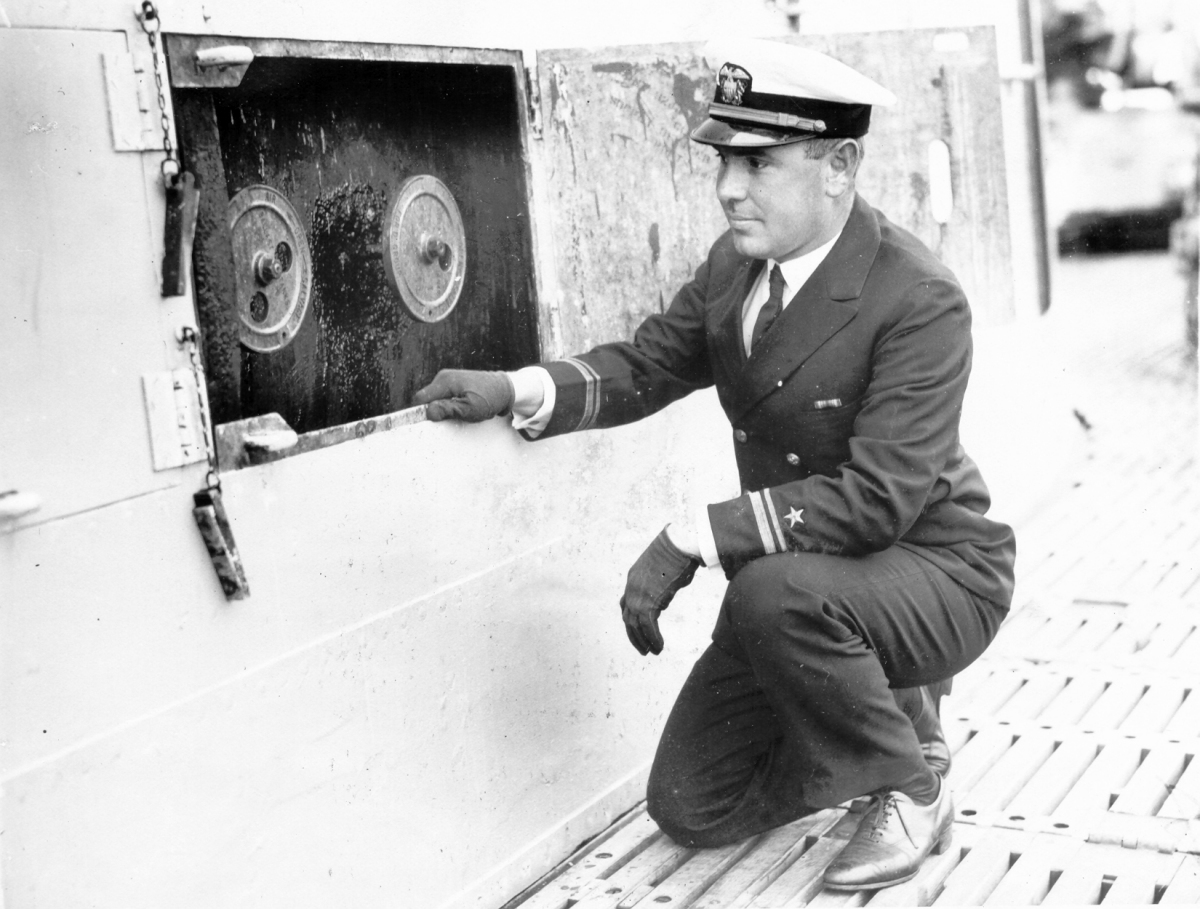
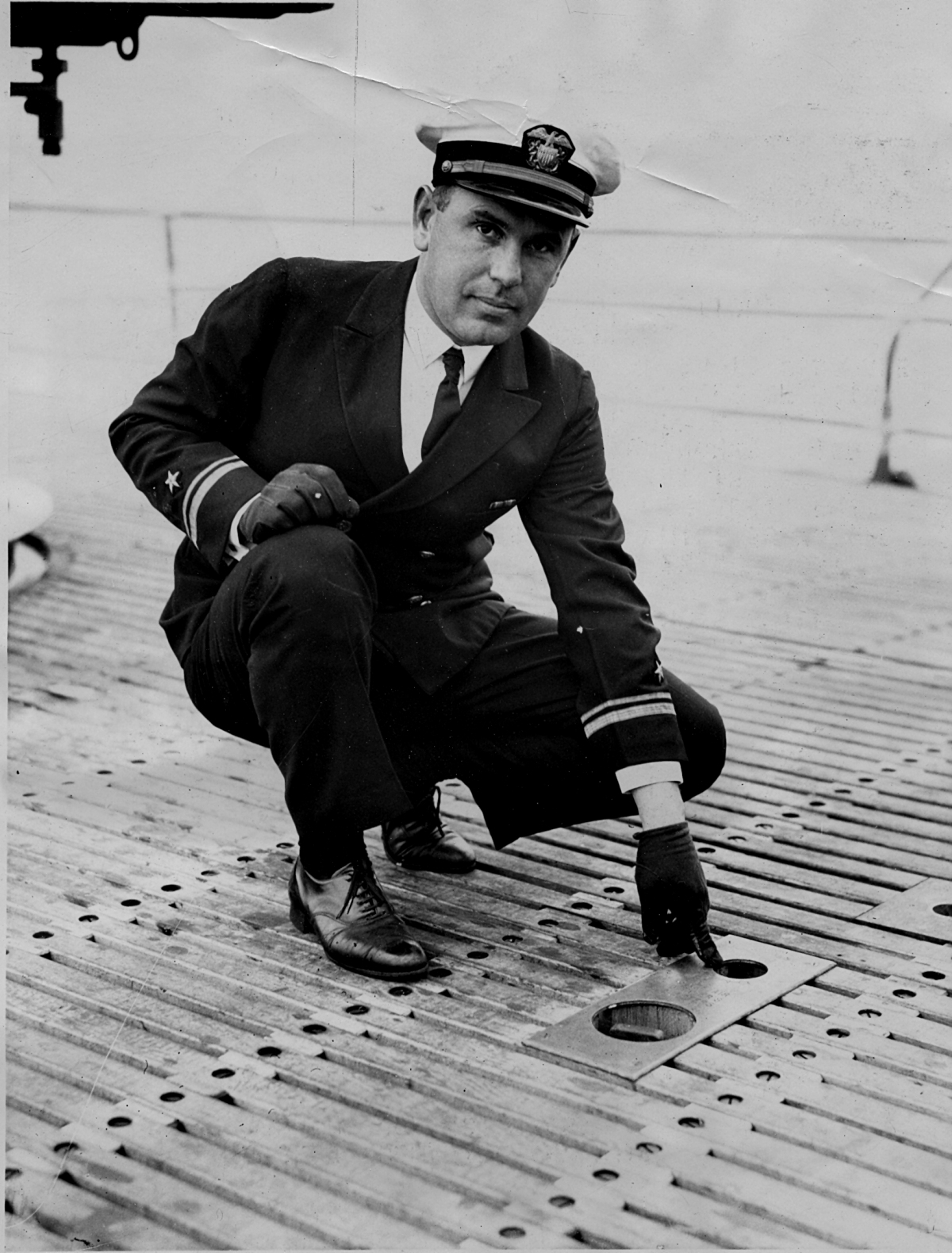
Photographs
Navy Directories & Officer Registers
The "Register of Commissioned and Warrant Officers of the United States Navy and Marine Corps" was published annually from 1815 through at least the 1970s; it provided rank, command or station, and occasionally billet until the beginning of World War II when command/station was no longer included. Scanned copies were reviewed and data entered from the mid-1840s through 1922, when more-frequent Navy Directories were available.
The Navy Directory was a publication that provided information on the command, billet, and rank of every active and retired naval officer. Single editions have been found online from January 1915 and March 1918, and then from three to six editions per year from 1923 through 1940; the final edition is from April 1941.
The entries in both series of documents are sometimes cryptic and confusing. They are often inconsistent, even within an edition, with the name of commands; this is especially true for aviation squadrons in the 1920s and early 1930s.
Alumni listed at the same command may or may not have had significant interactions; they could have shared a stateroom or workspace, stood many hours of watch together, or, especially at the larger commands, they might not have known each other at all. The information provides the opportunity to draw connections that are otherwise invisible, though, and gives a fuller view of the professional experiences of these alumni in Memorial Hall.
May 1923
July 1923
September 1923
November 1923
January 1924
March 1924
May 1924
July 1924
September 1924
November 1924
January 1925
March 1925
May 1925
July 1925
October 1925
January 1926
October 1926
January 1927
April 1927
October 1927
January 1928
April 1928
July 1928
October 1928
January 1929
April 1929
July 1929
October 1929
January 1930
April 1930
October 1930
January 1931
April 1931
July 1931
October 1931
January 1932
April 1932
October 1932
January 1933
April 1933
July 1933
October 1933
April 1934
July 1934
October 1934
January 1935
April 1935
October 1935
January 1936
April 1936
July 1936
January 1937
April 1937
September 1937
July 1938
January 1939
October 1939
June 1940
November 1940
April 1941
John is one of 26 members of the Class of 1922 on Virtual Memorial Hall.