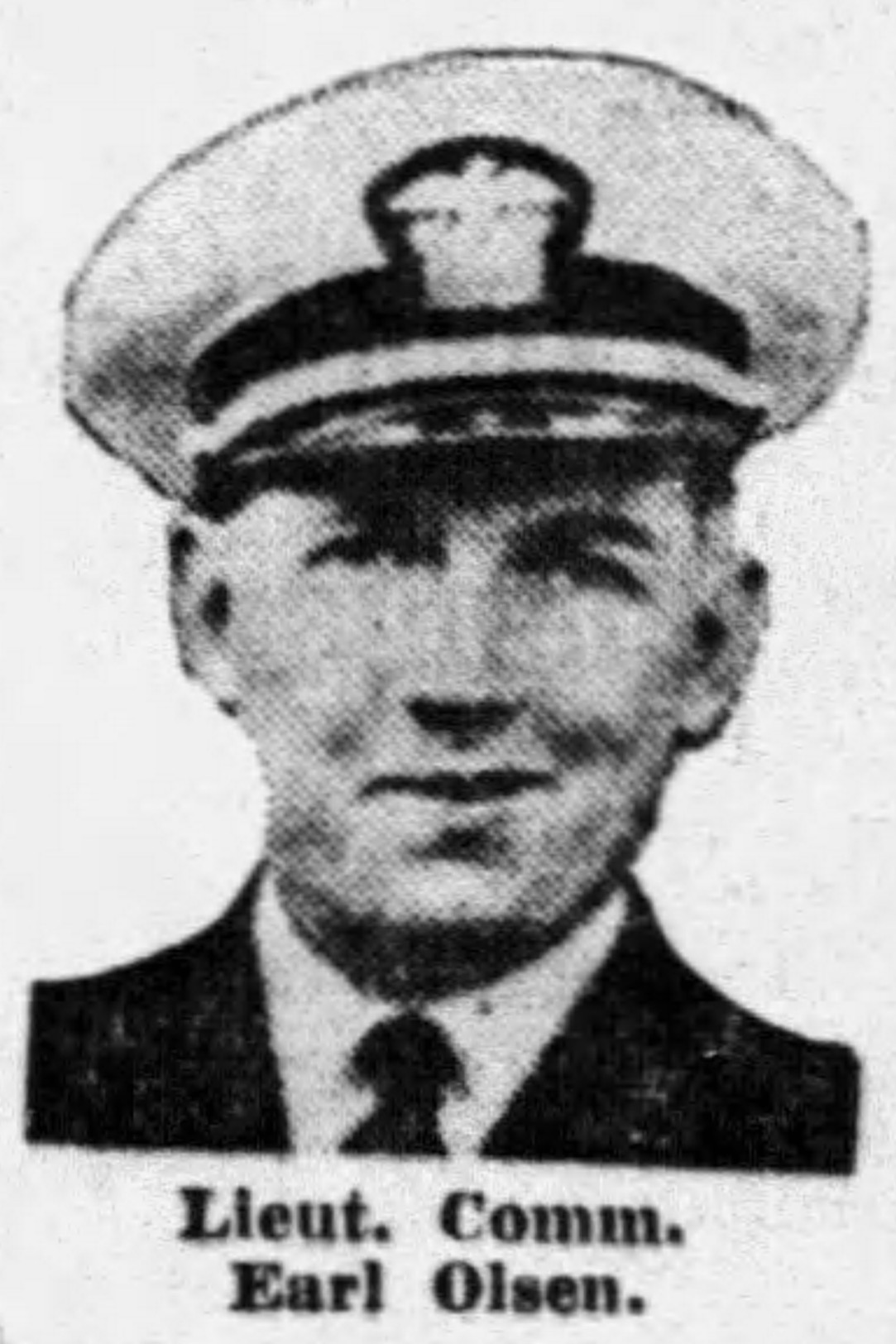
LCDR EARL K. OLSEN, USN
Lucky Bag Yearbook
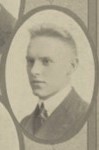
From the 1926 Lucky Bag:
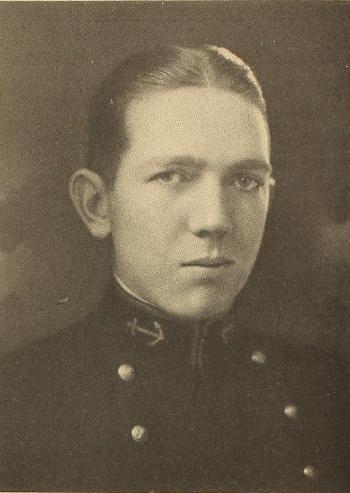
Earl Kenneth Olsen
Class Water Polo (3, 2), Numerals; Class Track (3); Baseball Squad (4); Stage Gang (4); Black N *****.
Loss
Earl was one of seven officers and 118 crew lost aboard USS Pensacola (CA 24) on November 30, 1942, at the Battle of Tassafaronga when the ship was heavily damaged by a torpedo and gunfire. He had reported aboard in February 1939 as the ship’s engineering officer.
Other Information
From researcher Kathy Franz:
Earl graduated from Waukegan township high school in 1921. “Our friend Earl has gone off to sea, To be an officer in the Navy; And just like his brothers, And so many others, The captain of a ship he desires to be.” Band; R. O. T. C. (2), (3), Captain (4); Boys’ Glee Club (2); French Club (2); Football, center (4).
Next, he went to a preparatory school at Marion, Alabama. He received his appointment to the Naval Academy by Congressman Carl O. Chindblom.
Earl married Mrs. Louise Sprink Miller on June 19, 1934. She was the widow of Lt. Charles F. Miller (’25) who died on the Akron. When Earl died, her son Charles was 2. She died on October 15, 1944, in a Honolulu hospital.
In February 1944, his mother sponsored the destroyer escort named in honor of Earl.
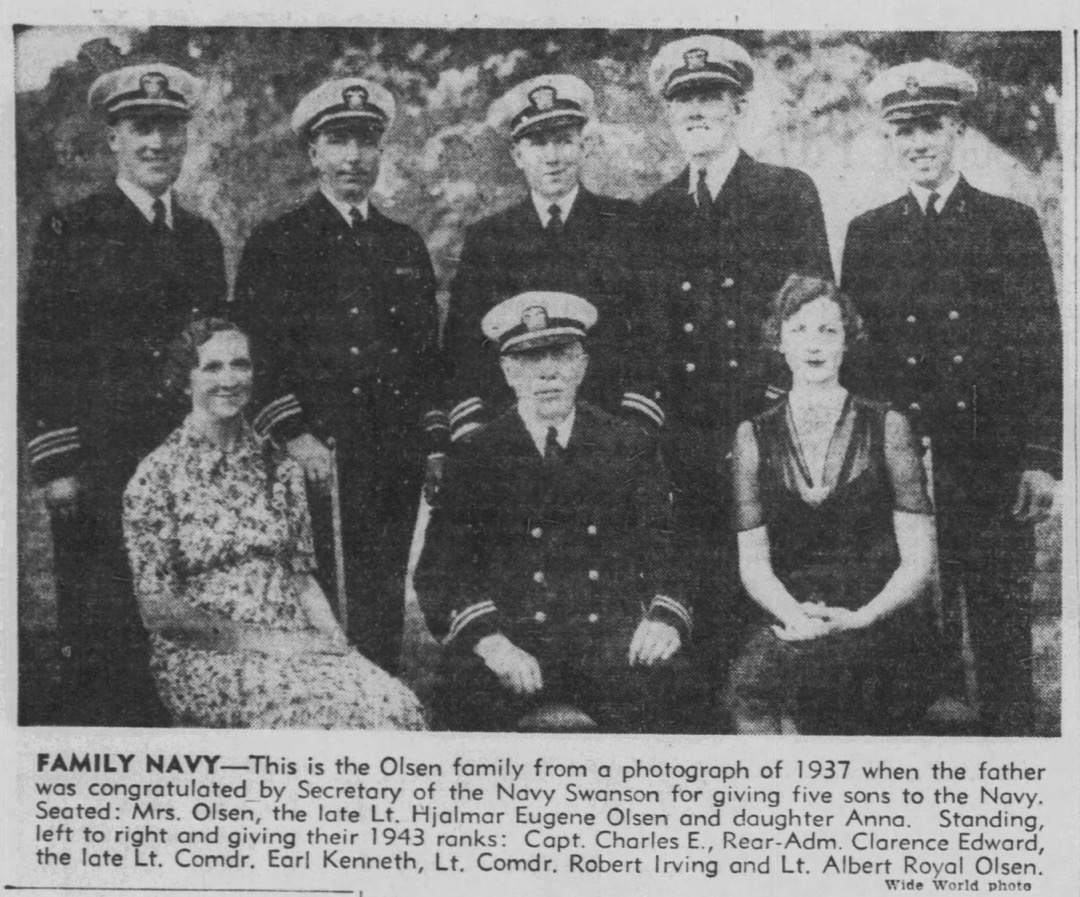
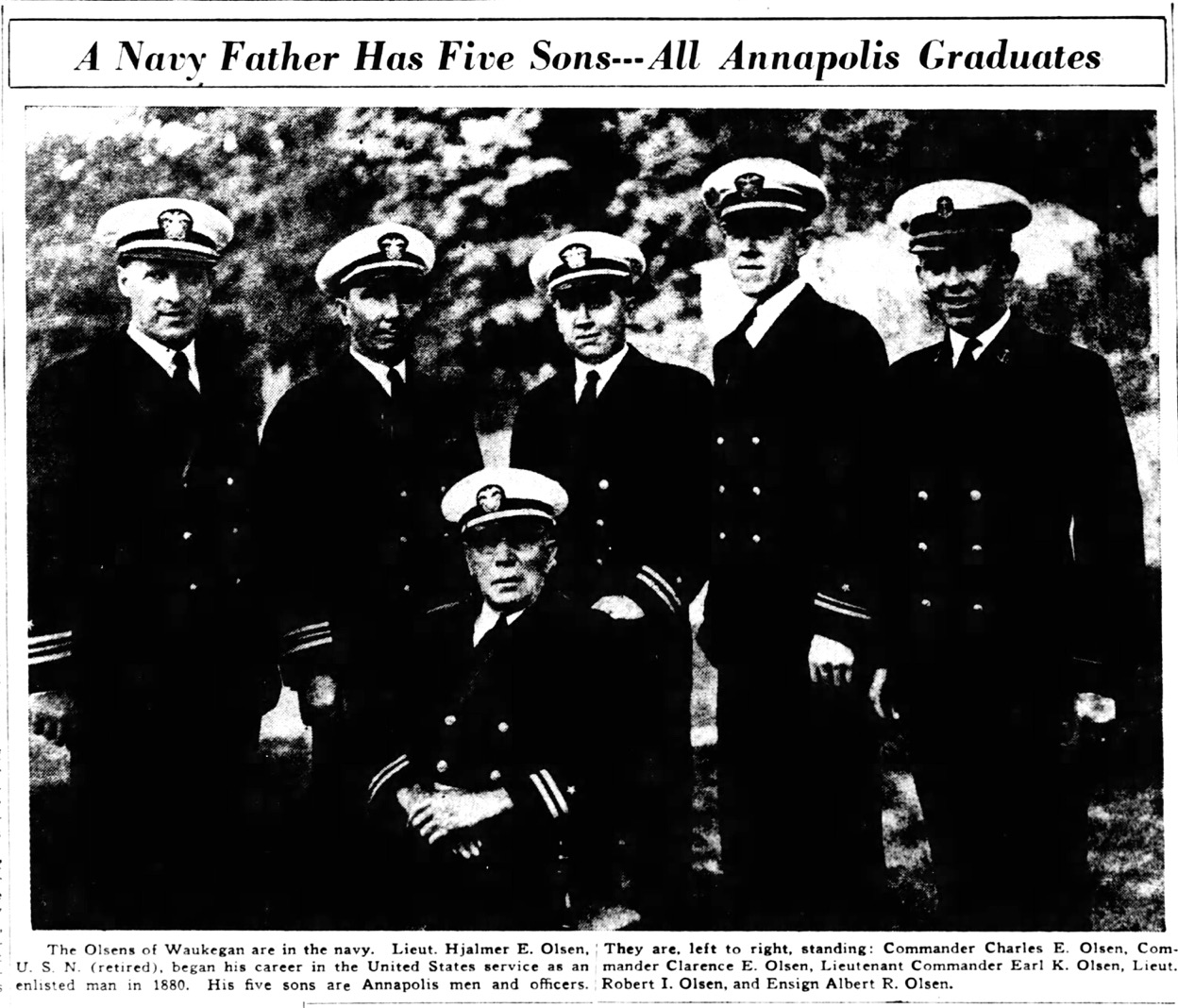
His father Hjalmer E. was in the navy as a boatswain. He retired but was called back as a reserve in WWI and became a lieutenant. His mother was Anna, and his sister Anna was married to Lt. Henry G. Munson (’32.) His brothers were Charles (’19,) Clarence (’21,) Robert (’33,) and Albert (’38).
His wife was listed as next of kin. He has a memory marker in Illinois.
Photographs
Navy Cross
From Hall of Valor:
The President of the United States of America takes pride in presenting the Navy Cross (Posthumously) to Lieutenant Commander Earl Kenneth Olsen, United States Navy, for extraordinary heroism and distinguished service in the line of his profession as Engineering Officer aboard the Heavy Cruiser U.S.S. Pensacola (CA-24), after the torpedoing of his ship in enemy-controlled waters during the Battle of Tassafaronga on the night of 30 November 1942. Lieutenant Commander Olsen coolly and efficiently directed the evacuation of the surviving personnel and attempted to carry the body of another officer to a place of safety, after enemy torpedo fire had flooded the engine room where Lieutenant Commander Olsen was stationed. As a result of his gallant spirit of self-sacrifice on behalf of the men on watch with him, he succumbed to smoke and toxic gasses. The conduct of Lieutenant Commander Olsen throughout this action reflects great credit upon himself, and was in keeping with the highest traditions of the United States Naval Service. He gallantly gave his life for his country.
General Orders: Bureau of Naval Personnel Information Bulletin No. 314 (May 1943)
Service: Navy
Rank: Lieutenant Commander
Namesake
USS Earl K. Olsen (DE 765) was named for Earl; the ship was sponsored by his widow.
Navy Directories & Officer Registers
The "Register of Commissioned and Warrant Officers of the United States Navy and Marine Corps" was published annually from 1815 through at least the 1970s; it provided rank, command or station, and occasionally billet until the beginning of World War II when command/station was no longer included. Scanned copies were reviewed and data entered from the mid-1840s through 1922, when more-frequent Navy Directories were available.
The Navy Directory was a publication that provided information on the command, billet, and rank of every active and retired naval officer. Single editions have been found online from January 1915 and March 1918, and then from three to six editions per year from 1923 through 1940; the final edition is from April 1941.
The entries in both series of documents are sometimes cryptic and confusing. They are often inconsistent, even within an edition, with the name of commands; this is especially true for aviation squadrons in the 1920s and early 1930s.
Alumni listed at the same command may or may not have had significant interactions; they could have shared a stateroom or workspace, stood many hours of watch together, or, especially at the larger commands, they might not have known each other at all. The information provides the opportunity to draw connections that are otherwise invisible, though, and gives a fuller view of the professional experiences of these alumni in Memorial Hall.
October 1926
January 1927
April 1927
October 1927
January 1928
April 1928
July 1928
October 1928
January 1929
April 1929
July 1929
October 1929
January 1930
April 1930
October 1930
January 1931
April 1931
July 1931
October 1931
January 1932
April 1932
October 1932
January 1933
April 1933
July 1933
October 1933
April 1934
July 1934
October 1935
January 1936
April 1936
July 1936
January 1937
April 1937
September 1937
January 1938
July 1938
January 1939
June 1940
November 1940
April 1941
Earl is one of 33 members of the Class of 1926 on Virtual Memorial Hall.